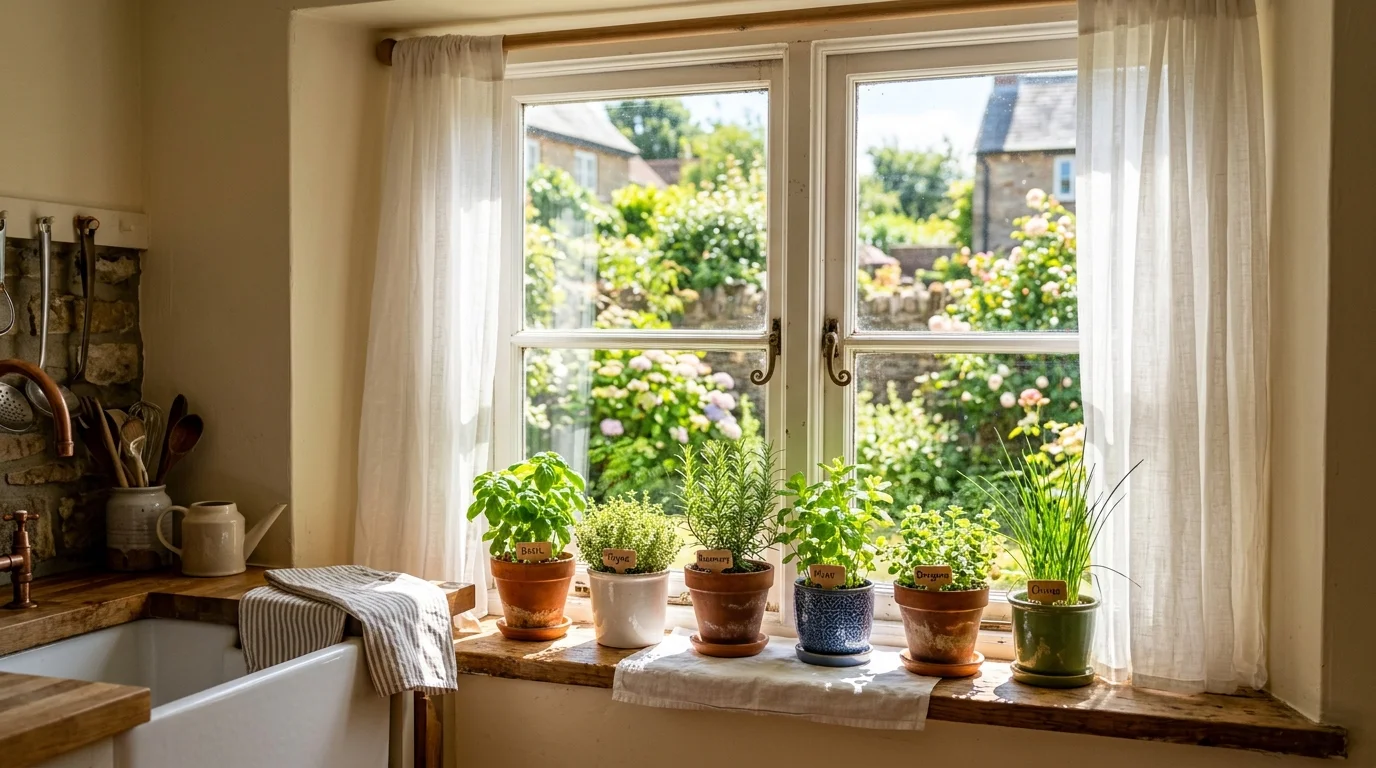
Indoor herb gardening lets you enjoy fresh, flavorful herbs no matter the season or the size of your outdoor space. With the right light, soil, and watering routine, you can grow a thriving windowsill herb garden that provides fresh basil, mint, chives, and more throughout the entire year. This guide covers everything you need to know about growing herbs indoors successfully.
Quick Answer: To grow herbs indoors, place them in a south-facing window with 6 to 8 hours of sun or use a full-spectrum LED grow light for 12 to 14 hours. Use well-draining potting mix, water when the top inch of soil is dry, and ensure pots have drainage holes.
What Are the Best Herbs to Grow Indoors?
Not every herb thrives indoors, but several varieties adapt perfectly to windowsill conditions. The best herbs for indoor gardening are those that tolerate lower light, do not need extreme heat, and stay compact in small containers.
Top indoor herbs ranked by ease:
- Mint - Tolerates partial shade, grows fast, very forgiving
- Chives - Hardy, compact, handles cooler indoor temperatures
- Parsley - Does well in moderate light, long harvest period
- Basil - Needs the most sun but thrives indoors with good light
- Thyme - Compact, drought-tolerant, prefers drier conditions
- Oregano - Similar to thyme, loves dry soil and sunshine
For a deeper dive into growing thyme inside, see our guide on how to grow thyme indoors.
How Much Light Do Indoor Herbs Need?
Light is the single most important factor for indoor herb gardening success. Without adequate light, herbs become leggy, lose their flavor, and eventually die. Understanding how to provide the right light will make or break your indoor garden.
Natural light by window direction:
- South-facing window: Best option. Provides 6 to 8 hours of direct sun. Ideal for basil, rosemary, and other sun-loving herbs.
- East-facing window: Gentle morning light. Works well for mint, chives, and parsley.
- West-facing window: Afternoon sun, which can be intense. Good for most herbs but watch for leaf scorch in summer.
- North-facing window: Too dark for most herbs. You will need a grow light.
Using grow lights for indoor herbs:
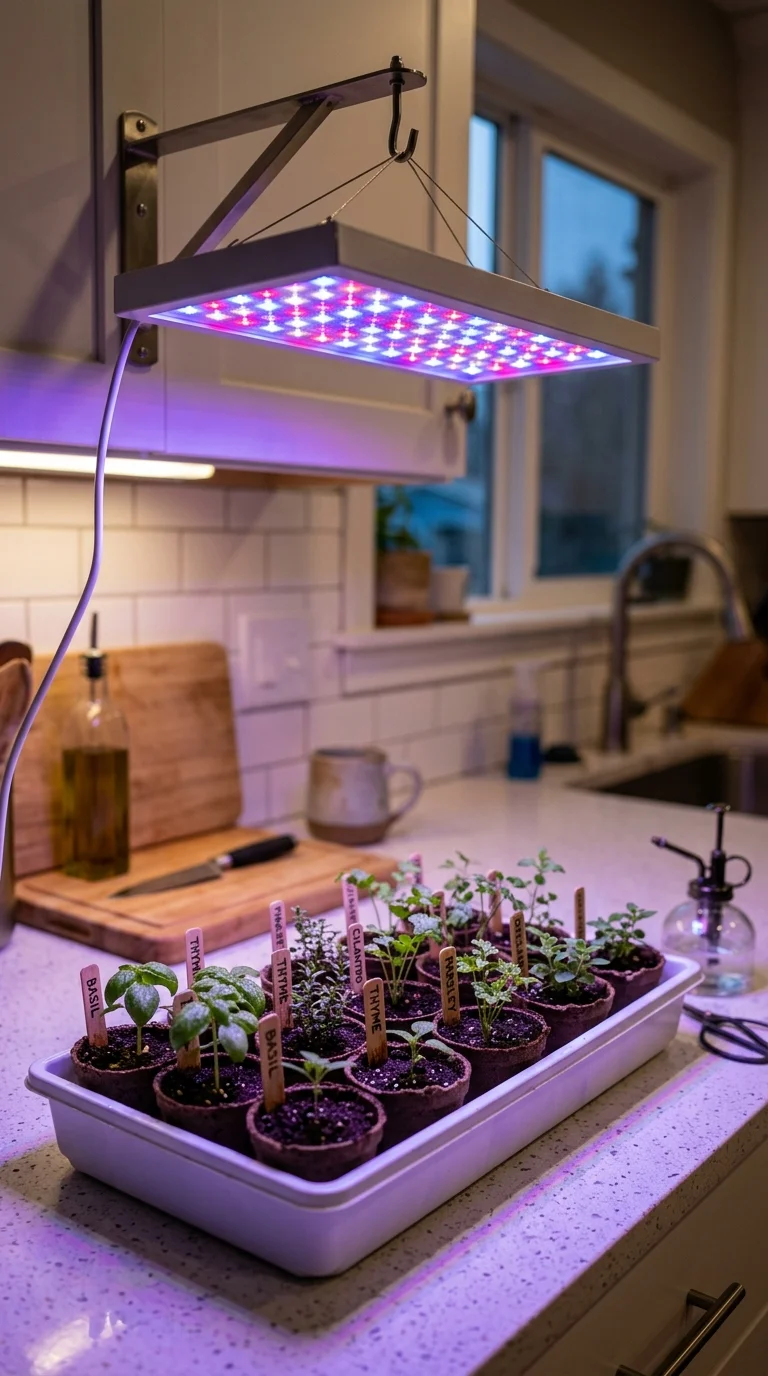
If you do not have a sunny window, a full-spectrum LED grow light is the solution. Place the light 6 to 12 inches above your herbs and run it for 12 to 14 hours per day. Use a timer to maintain consistency. This mimics natural daylight and keeps herbs productive through dark winter months.
A common mistake is placing grow lights too far from plants. Distance matters - lights that are too far away deliver insufficient energy, resulting in weak growth. Keep them close and adjust as plants grow taller.
Choosing the Right Pots for Indoor Herb Gardening
Container selection directly affects drainage, root health, and how often you need to water. The best pots for indoor herbs balance moisture retention with airflow.
Pot selection guidelines:
- Size: 6 to 8 inches in diameter works for most herbs. Mint and parsley prefer 8 to 10 inches.
- Material: Plastic pots hold moisture longer, making them ideal for thirsty herbs. Terra cotta is porous and dries faster, perfect for thyme and oregano.
- Drainage: Non-negotiable. Every pot must have drainage holes. Without them, water sits at the bottom and causes root rot.
- Saucers: Use saucers to catch runoff and protect windowsills and countertops.
When repotting herbs, go up only one pot size at a time. A pot that is too large holds excess moisture around the roots, which most herbs dislike. Start small and upgrade as plants outgrow their containers.
Indoor Herb Watering Schedule and Techniques
Overwatering is the most common reason indoor herbs fail. Herbs prefer soil that is evenly moist but never soggy. The key is to check soil moisture before reaching for the watering can.
How to check soil moisture:
Stick your finger about 1 inch into the soil. If it feels dry, it is time to water. If it feels damp, wait another day or two. This simple test prevents the vast majority of watering problems.
Watering best practices:
- Water in the morning so plants have all day to absorb moisture
- Water at the soil level, not over the leaves, to prevent fungal issues
- Use room-temperature water; cold water shocks roots
- Allow water to drain completely through the pot; never let herbs sit in standing water
- Reduce watering in winter when growth slows
Herb-specific watering needs:
- Thirsty herbs (mint, parsley, basil): Water when the top inch of soil is dry
- Drought-tolerant herbs (thyme, oregano): Water only when soil is completely dry
- Average herbs (chives): Water consistently but do not overdo it
For more details on growing basil specifically, see our how to grow basil at home guide.
Temperature and Humidity for Indoor Herbs
Most culinary herbs prefer temperatures between 60 and 75 degrees Fahrenheit, which matches typical indoor conditions. However, heating vents, cold drafts, and dry air can stress plants.
Temperature tips:
- Keep herbs away from heating vents and radiators
- Avoid placing pots near cold drafts from windows or doors
- Most herbs tolerate temperature drops at night without issue
- Basil is the most cold-sensitive; keep it above 60 degrees Fahrenheit
Managing humidity:
Indoor air, especially in winter, is often too dry for herbs. Low humidity causes leaf tips to brown and slows growth.
- Mist herbs lightly every few days
- Place pots on a tray filled with pebbles and water (keep pot bases above the water line)
- Group herbs together to create a humid microclimate
- Use a small humidifier near your herb garden in dry months
Troubleshooting Leggy Indoor Herbs
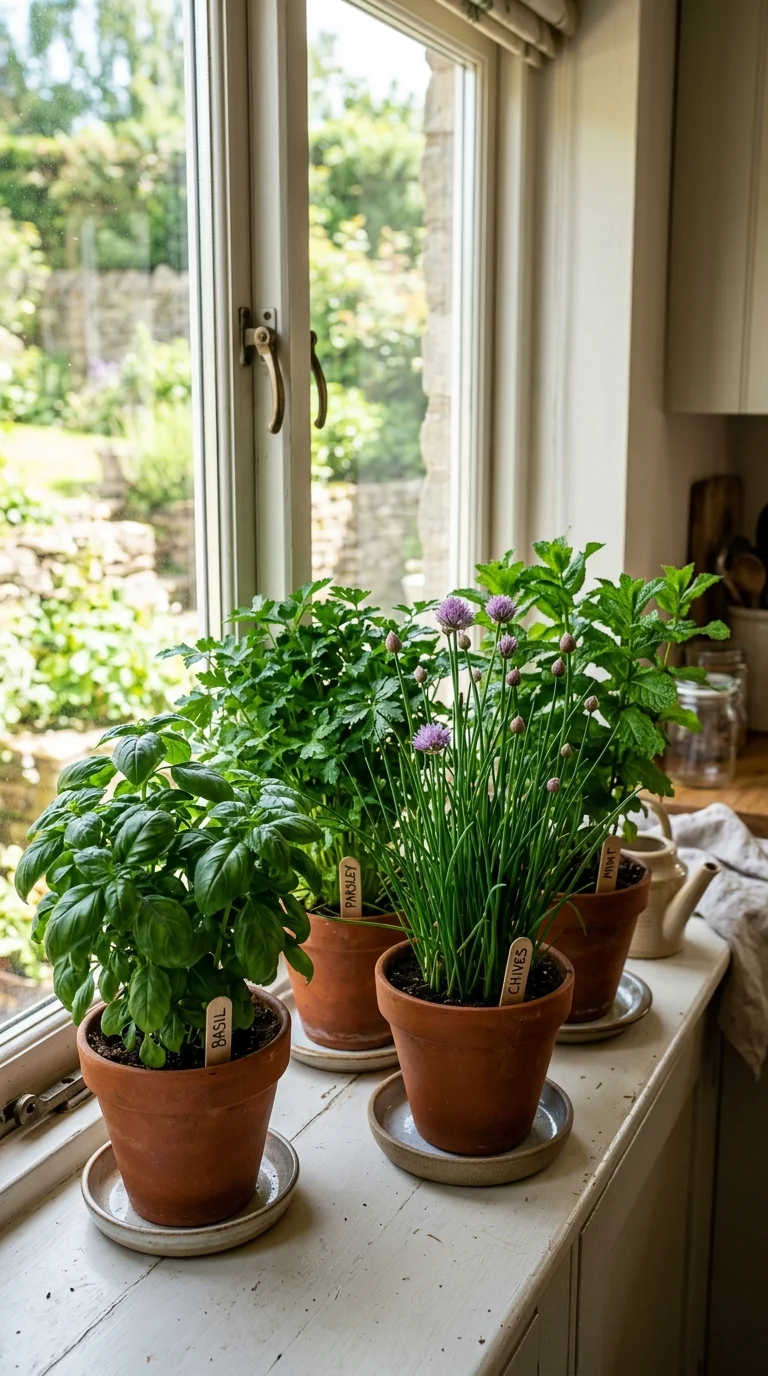
Leggy growth is the most common problem in indoor herb gardening. It happens when herbs stretch toward an insufficient light source, producing long, weak stems with sparse leaves.
Why herbs get leggy:
- Not enough light (the number one cause)
- Grow light placed too far from plants
- Inconsistent light schedule
- Overcrowded pots blocking light to lower leaves
How to fix leggy herbs:
- Move to more light: Relocate to a sunnier window or lower your grow light closer to the plants.
- Prune aggressively: Cut leggy stems back to a leaf node. This forces the plant to produce side shoots and become bushier.
- Rotate pots: Turn pots a quarter turn every few days so all sides receive even light.
- Thin seedlings: If herbs are overcrowded, remove the weakest plants to give others room and light.
- Start fresh: If herbs are extremely leggy and woody, it may be easier to plant new seeds than to revive the old ones.
Harvesting Indoor Herbs for Maximum Flavor
Harvesting indoor herbs properly keeps plants productive and flavorful. The same rules apply indoors as outdoors: harvest regularly, take from the top, and never remove more than one-third of the plant at once.
Indoor harvesting tips:
- Harvest in the morning when essential oils are strongest
- Use clean, sharp scissors to make clean cuts
- Cut just above a leaf node to encourage new growth
- Snip off flower buds to keep plants focused on leaf production
- Use harvested herbs immediately for the best flavor
If you grow mint indoors, our guide on how to grow mint without spreading covers container strategies for keeping it contained.
Creating a Complete Indoor Herb Garden Setup
Building an indoor herb garden does not require a large investment. Here is a practical setup plan for different spaces:
For a sunny windowsill:
- 3 to 5 pots (6 to 8 inches)
- South-facing window
- Good potting mix with perlite
- Saucers for drainage
- Herbs: basil, mint, chives
For a desk or counter (with grow light):
- Small LED grow light with clamp
- 2 to 3 compact pots (4 to 6 inches)
- Timer for light schedule
- Herbs: thyme, oregano, chives
For a kitchen herb wall:
- Wall-mounted planters or hanging pots
- Full-spectrum grow light strip
- Herbs: basil, parsley, mint, chives
- Easy access for cooking
For a comprehensive guide to setting up your entire herb garden, visit our article on how to grow herbs at home.
Frequently Asked Questions
Q: Can you grow herbs indoors all year?
A: Yes. Herbs like basil, chives, mint, parsley, and thyme grow well indoors year-round with adequate sunlight or grow lights, consistent watering, and proper air circulation.
Q: How many hours of light do indoor herbs need?
A: Indoor herbs need 6 to 8 hours of direct sunlight or 12 to 14 hours under a grow light. South-facing windows provide the most light; east and west windows work for lower-light herbs.
Q: Why are my indoor herbs growing leggy?
A: Leggy growth means the herb is not getting enough light. Move plants to a sunnier window or add a grow light. Trim stems to encourage bushier growth and rotate pots regularly.
Q: What is the best grow light for indoor herbs?
A: Full-spectrum LED grow lights are best for indoor herbs. Place them 6 to 12 inches above plants and run for 12 to 14 hours per day. Look for lights with a color temperature of 4000 to 6500K.
Q: How do you keep indoor herbs from drying out?
A: Water when the top inch of soil feels dry. Use pots with drainage holes, mist herbs occasionally for humidity, and group plants together to create a moist microclimate.
Q: Can I grow herbs indoors without grow lights?
A: Some herbs like chives and mint tolerate lower light, but most herbs need a south-facing window. Without adequate light, herbs become leggy, lose flavor, and eventually die.
