Making herb infused oils and vinegars at home is one of the most rewarding and cost-effective DIY pantry projects you can undertake. With just a handful of fresh herbs from your garden, quality oil or vinegar, and a few clean glass bottles, you can create gourmet condiments that rival expensive specialty store versions. Whether you are drizzling rosemary-infused olive oil over roasted vegetables or gifting a bottle of basil-infused vinegar to a friend, homemade herb infused oils and vinegars add a personal, artisanal touch to every meal.
Quick Answer: To make herb infused oil, combine fresh or dried herbs with a neutral or olive oil in a clean glass jar. Use the cold infusion method for delicate herbs like basil by steeping them in oil for 2 to 4 weeks, or the heat infusion method for woody herbs like rosemary by gently warming the oil and herbs together, then straining and storing in a sealed bottle.
Why Make Your Own Herb Infused Oils and Vinegars
Store-bought herb infused oils can cost upwards of fifteen dollars for a small bottle, yet making them at home costs a fraction of that price and gives you complete control over the quality and flavor. When you make your own herb infused oils, you choose the herbs, you choose the oil, and you avoid the preservatives and artificial flavors that many commercial products contain.
Herb infused vinegars are equally simple and offer a fat-free way to add complex flavor to dressings, marinades, sauces, and drinks. A bottle of tarragon-infused white wine vinegar or a jar of chili-infused rice vinegar can transform a simple vinaigrette into something extraordinary.
Beyond personal use, homemade herb infused oils and vinegars make exceptional gifts. They are beautiful, personal, and useful, and they show the recipient that you put thought and care into a handmade present. Pair a bottle with a recipe card and you have a gift that is both practical and heartfelt.
If you grow your own herbs, you already have the main ingredient. Our guide on how to grow herbs at home covers everything you need to start a windowsill or garden herb collection.
Cold Infusion vs Heat Infusion: Which Method Should You Use
There are two primary methods for making herb infused oils, and each has its advantages depending on the type of herb you are using.
Cold Infusion is the gentler method and is best for delicate herbs like basil, chives, parsley, and tarragon. To cold infuse, simply pack clean, completely dry herbs into a sterilized glass jar and cover them with room-temperature oil. Seal the jar tightly and place it in a cool, dark cupboard for two to four weeks. Shake the jar gently every few days. The oil slowly extracts the flavor and aroma from the herbs without applying any heat. Once the oil reaches your desired intensity, strain out the herbs through a fine-mesh sieve or cheesecloth and transfer to a clean bottle.
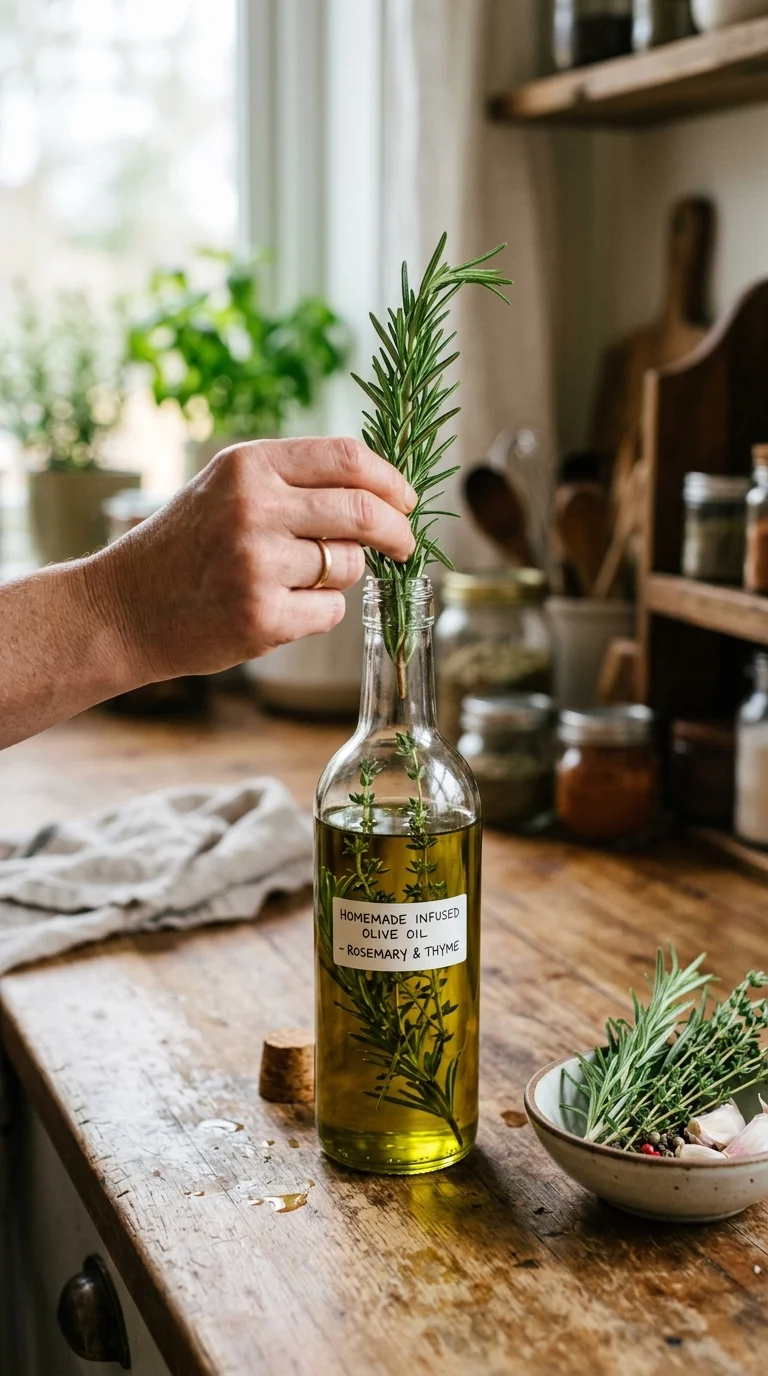
Heat Infusion is faster and works beautifully with hardy, woody herbs like rosemary, thyme, oregano, sage, bay leaf, and chili peppers. To heat infuse, pour your oil into a small saucepan and add a generous handful of fresh herbs. Warm the oil over very low heat for thirty to sixty minutes. The oil should never reach a simmer or boil. You want it warm enough to release the essential oils from the herbs, not hot enough to cook them. Remove from heat, let the oil cool completely, then strain and bottle.
The heat method gives you flavored oil in under an hour, while the cold method takes weeks but produces a more nuanced, fresh-tasting result. Many home cooks use both methods depending on the herbs they are working with.
Best Herbs for Infusing Oil and Vinegar
Not all herbs work equally well for infusion, so knowing which ones to choose will save you time and produce better results.
Rosemary is one of the best herbs for infusing oil. Its woody, pine-like flavor intensifies beautifully when steeped, and it holds up well during the heat infusion process. Rosemary infused olive oil is a kitchen staple for drizzling over pizza, pasta, and roasted potatoes.
Thyme infuses oil with a subtle, earthy warmth. It pairs particularly well with olive oil and is wonderful in salad dressings, marinades, and herb-infused butter. Fresh thyme works for both cold and heat infusion methods.
Oregano delivers a bold, slightly bitter Mediterranean flavor that shines in infused oils for pizza, pasta sauces, and grilled meats. It is best infused using the heat method to fully extract its aromatic oils.
Basil produces a bright, sweet, anise-like infused oil that is incredible over tomatoes, mozzarella, and fresh pasta. Because basil is delicate, it should always be cold infused to prevent the flavor from turning bitter.
Chili peppers make a spicy infused oil that adds heat to any dish. Slice fresh chilies open to release their oils and steep them in a neutral oil for a few days. The longer they steep, the hotter the oil becomes.
Bay leaf and sage create sophisticated, savory infused oils that are wonderful in soups, stews, and bean dishes. Both herbs hold up well to gentle heat infusion.
For vinegar infusions, these same herbs work beautifully, but the acidity of vinegar extracts flavor more gently and evenly, making almost any herb suitable for vinegar infusion.
How to Make Herb Infused Vinegar Step by Step
Herb infused vinegar is arguably even simpler than infused oil because vinegar is naturally self-preserving and carries less food safety risk. Here is the step-by-step process.
- Choose your vinegar. White wine vinegar, red wine vinegar, champagne vinegar, apple cider vinegar, and rice vinegar are all excellent bases. Choose a vinegar whose flavor complements your chosen herbs.
- Prepare the herbs. Wash fresh herbs thoroughly and dry them completely. Any moisture left on the herbs can dilute the vinegar and reduce shelf life. Pat them with a clean towel and let them air dry for an hour.
- Pack the jar. Place the dry herbs in a clean, sterilized glass jar. A wide-mouth mason jar works perfectly. Use enough herbs to fill the jar about halfway.
- Add the vinegar. Pour the vinegar over the herbs until they are completely submerged. Use a chopstick to press the herbs down and release any trapped air bubbles.
- Seal and store. Seal the jar tightly with a non-metallic lid or place a piece of parchment paper under a metal lid to prevent corrosion. Store in a cool, dark place for two to four weeks.
- Shake occasionally. Give the jar a gentle shake every few days to help distribute the flavor.
- Strain and bottle. After steeping, strain the vinegar through a fine-mesh sieve or cheesecloth into a clean glass bottle. For a decorative touch, add a small sprig of fresh herb to the final bottle.
Food Safety Tips for Homemade Herb Infused Oils
Safety is important when making herb infused oils, especially when using fresh ingredients. The primary concern is botulism, a serious illness caused by the Clostridium botulinum bacteria that can grow in the anaerobic, low-acid environment of oil.
Key safety rules to follow:
- Always refrigerate herb infused oil made with fresh herbs. Fresh herbs contain moisture and can introduce bacteria into the oil. Refrigerated oil should be used within two to four weeks.
- Never infuse oil with fresh garlic and store it at room temperature. Garlic is particularly high in moisture and low in acid, creating ideal conditions for botulism growth. If you want garlic-infused oil, refrigerate it and use it within four days, or use dried garlic.
- Use the heat method for room-temperature storage. Heating the oil to at least 140°F (60°C) during infusion helps kill bacteria. However, even heat-infused oils should be used within one to three months and stored in a cool, dark place.
- Dry herbs are safer for room-temperature storage. Dried herbs have significantly less moisture than fresh herbs, reducing the risk of bacterial growth. Oil infused with dried herbs can be stored at room temperature for several months.
- Always use clean, sterilized equipment. Wash jars, lids, funnels, and strainers with hot soapy water and dry them thoroughly before use.
Following these guidelines ensures your homemade herb infused oils and vinegars are safe to enjoy and share.
How to Use Herb Infused Oils and Vinegars in Cooking
The possibilities for using homemade herb infused oils and vinegars in your kitchen are nearly endless. Here are some of the most popular and delicious ways to put them to work.
As a finishing drizzle. The simplest way to use herb infused oil is to drizzle it over a finished dish. A swirl of rosemary olive oil over homemade pizza, a splash of basil oil over fresh caprese salad, or a drizzle of thyme oil over roasted root vegetables adds instant sophistication.
In salad dressings. Herb infused vinegars are the foundation of incredible salad dressings. Combine a quarter cup of basil-infused white wine vinegar with a half cup of extra virgin olive oil, a teaspoon of Dijon mustard, and a pinch of salt for a dressing that elevates any salad.
As a marinade. Herb infused oils make excellent marinades for meats, poultry, and vegetables. Coat chicken thighs in rosemary olive oil and let them sit for thirty minutes before grilling for deeply flavored, juicy results.
In dips and spreads. Stir herb infused oil into hummus, mix it into cream cheese for herbed dip, or use it as a base for a quick bruschetta topping with diced tomatoes and garlic.
As a finishing touch for soups. A tiny drizzle of herb infused oil added to a bowl of soup just before serving makes it look and taste restaurant-quality. Chili oil on lentil soup, basil oil on tomato soup, or sage oil on butternut squash soup are all stunning combinations.
Gift Ideas and Packaging Tips
Homemade herb infused oils and vinegars make genuinely thoughtful gifts for food lovers, home cooks, and anyone who appreciates handmade items. The presentation is what elevates them from simple pantry items to special gifts.
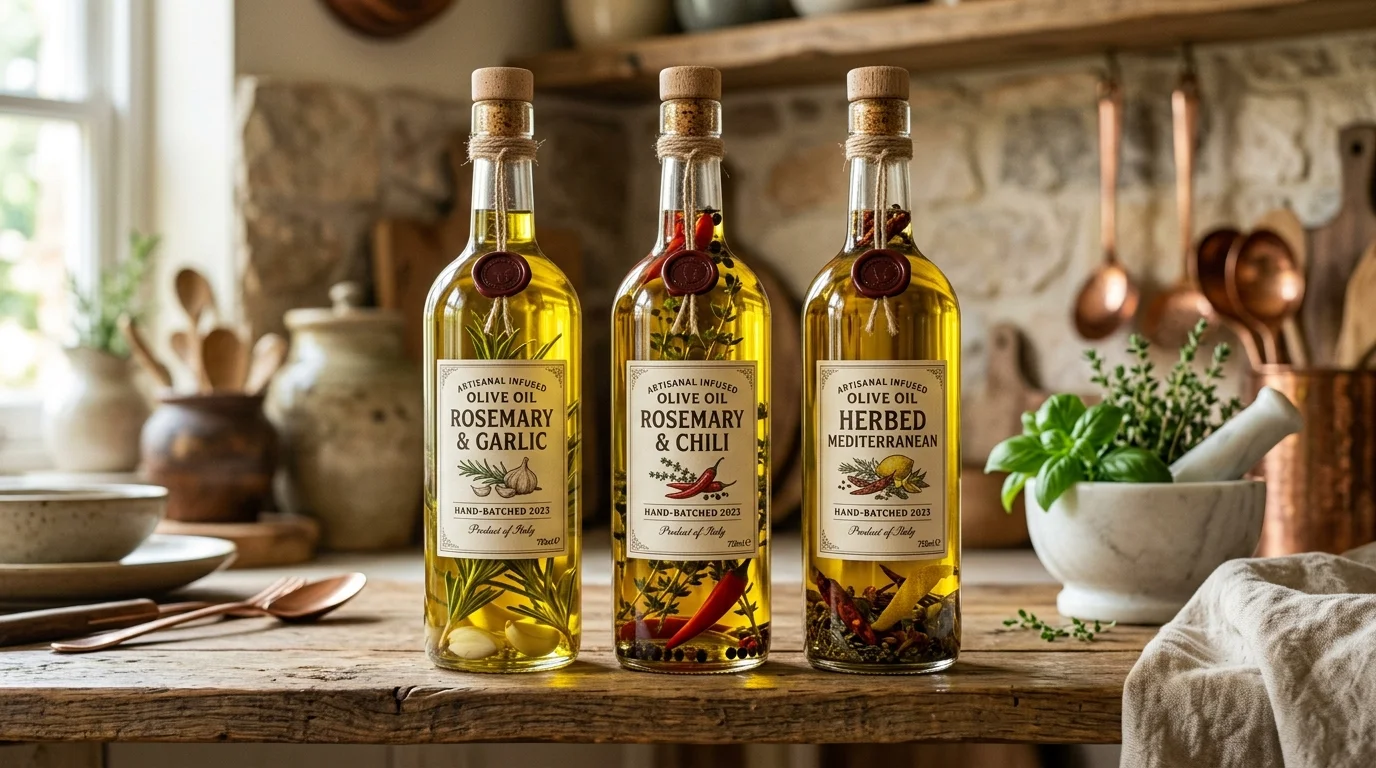
Use clear glass bottles so the beautiful colors of the herbs are visible. Add a fresh sprig of the herb used for infusion to the bottle for visual appeal and a decorative tag. Ribbon, twine, and a hand-written label add a personal touch that store-bought gifts simply cannot match.
Create themed gift sets by pairing an infused oil with a matching vinegar. For example, bundle rosemary olive oil with rosemary red wine vinegar along with a recipe card for rosemary roasted potatoes. Or pair basil oil with basil vinegar and include a recipe for homemade pasta with basil sauce.
Consider making a collection of three small bottles with different herb infusions. A set of basil oil, chili oil, and thyme oil gives the recipient variety and shows off your skill in the kitchen.
For holiday gifts, add dried herb sachets, wooden spoons, or a small cookbook alongside your infused bottles. These complementary items turn a simple gift into a curated experience.
