Growing herbs at home does not require a shed full of expensive equipment. The truth is that most of what you see marketed to home gardeners is unnecessary. What you actually need is a small, carefully selected collection of high-quality herb gardening tools that will serve you for years. This guide cuts through the marketing noise to tell you exactly which tools are worth your money, which ones you can skip, and where budget picks perform just as well as premium alternatives.
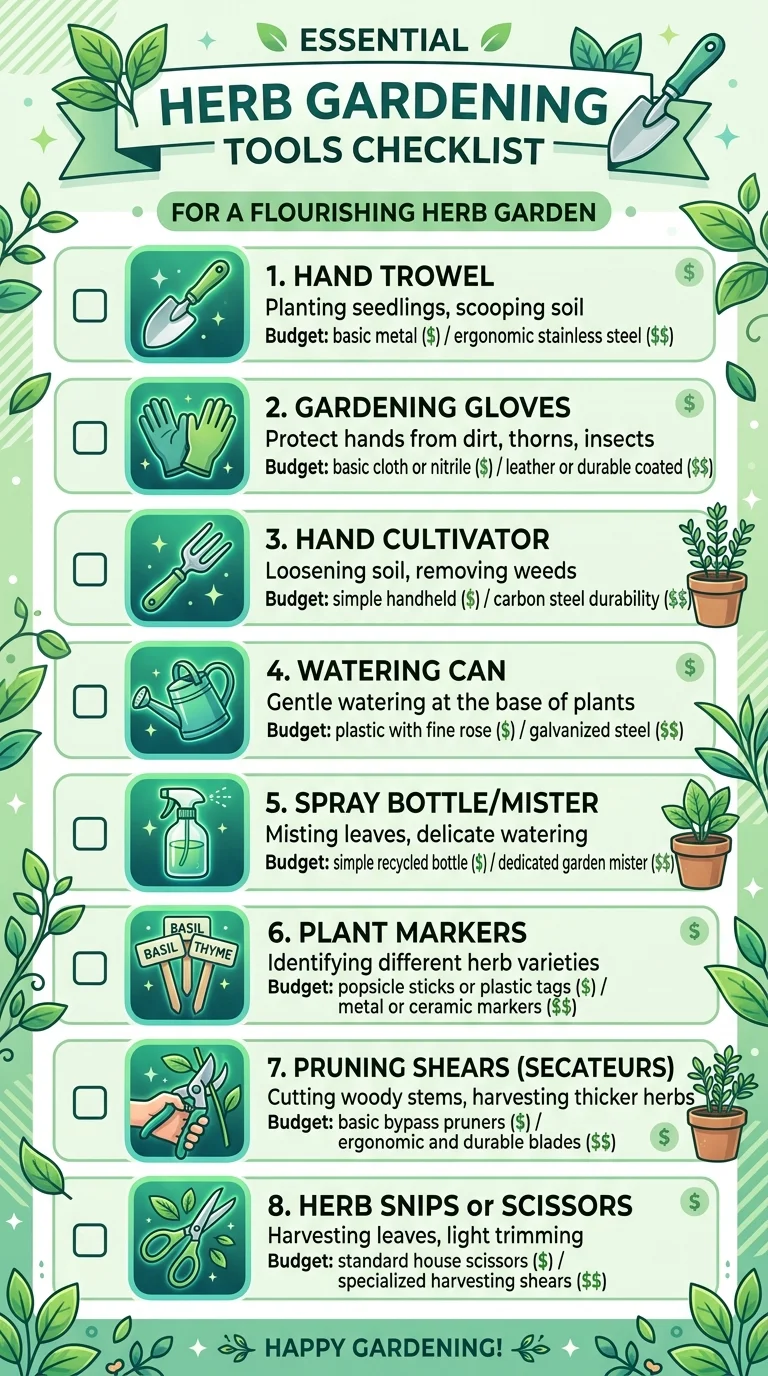
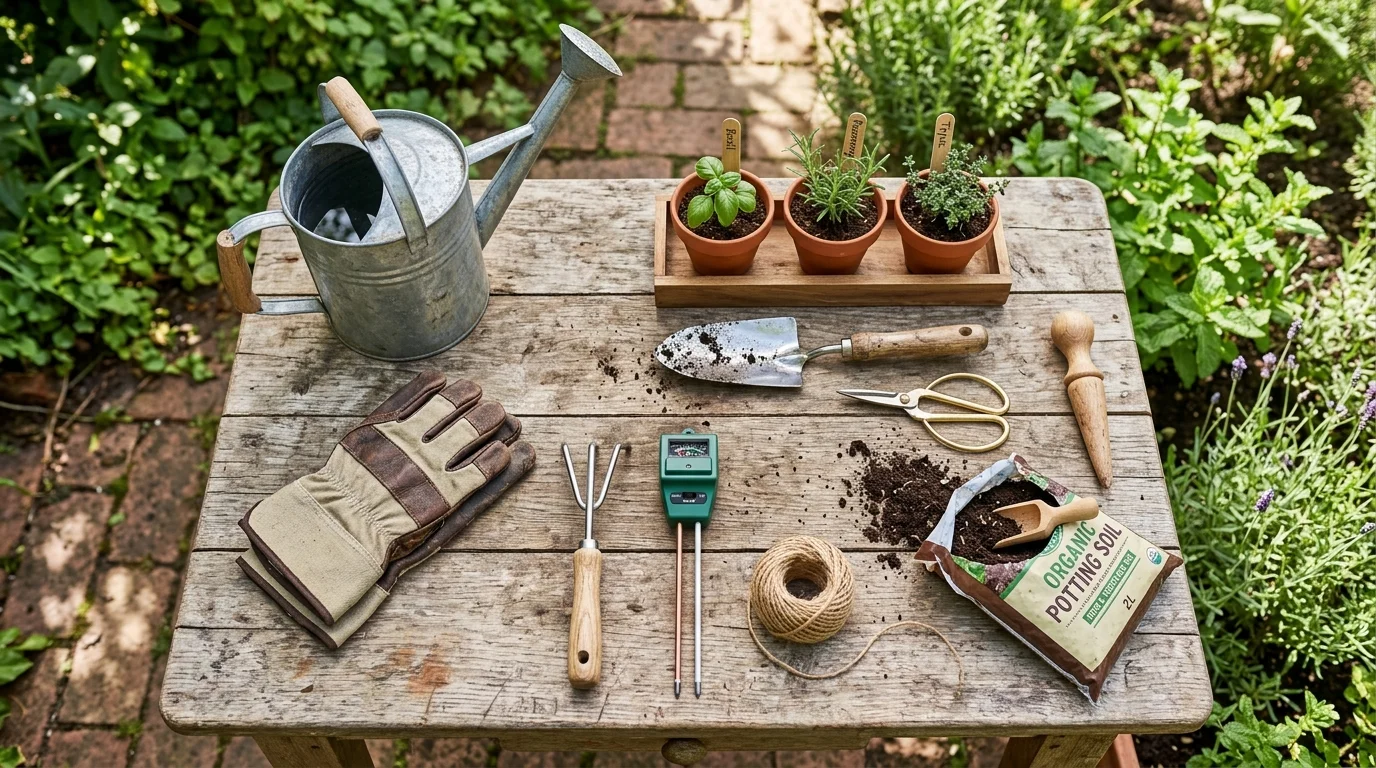
Quick Answer: The three essential herb gardening tools are sharp bypass pruning shears, a hand trowel, and a narrow-spout watering can. Add a soil moisture meter and plant labels as you advance. Invest in quality shears and buy budget options for everything else.
Why Your Tools Matter More Than You Think
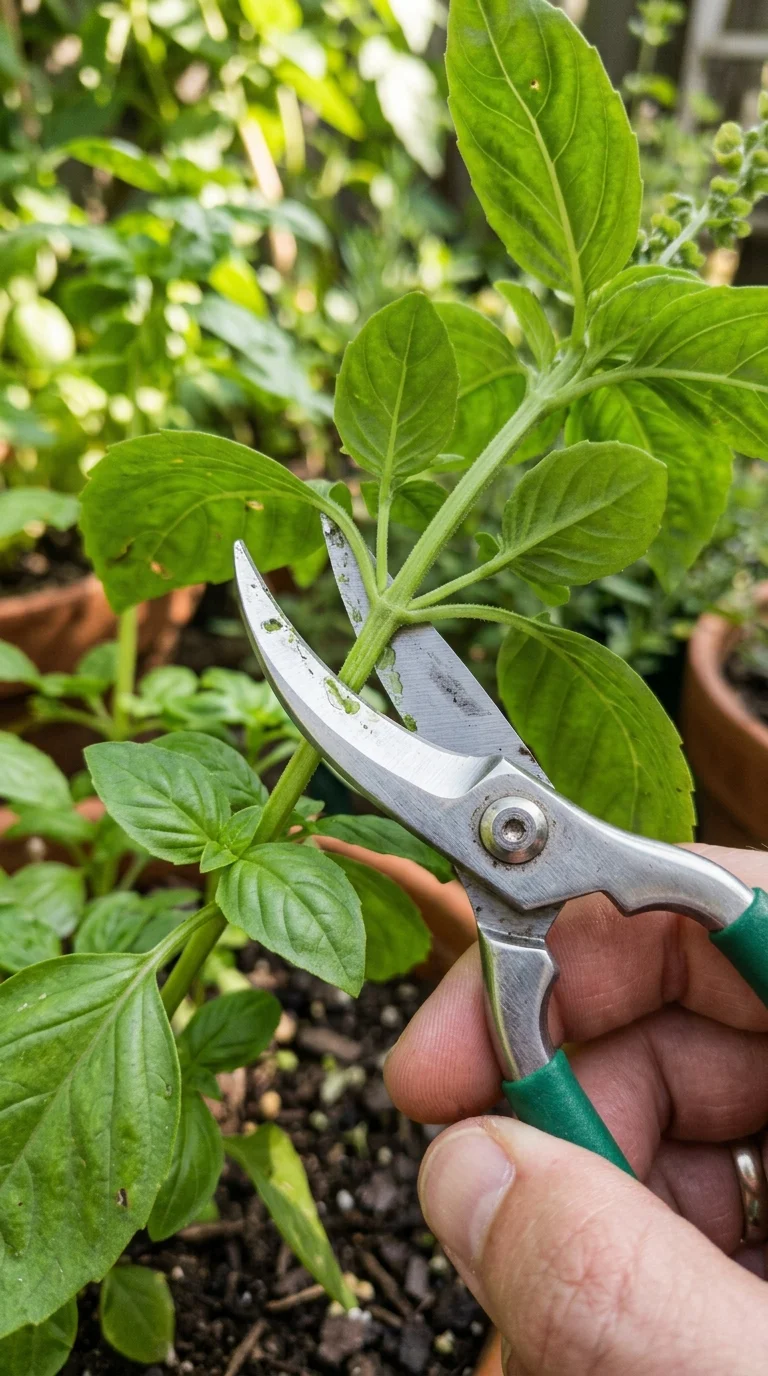
Many new herb gardeners assume any scissors or old kitchen knife will do for harvesting herbs. This is a costly mistake. Dull blades crush stems instead of cutting cleanly, creating ragged wounds that invite disease and slow regrowth. A crushed basil stem heals slowly and may develop black rot, while a clean cut from sharp shears heals in hours.
The right herb garden tools also save time and reduce frustration. A well-balanced hand trowel makes potting up seedlings effortless. A watering can with a narrow spout directs water to the soil without wetting foliage. A good pair of snips fits comfortably in your hand and makes quick work of a morning harvest session. Quality tools transform gardening from a chore into a genuine pleasure.
Tier 1: The Tools You Actually Need
These are the non-negotiable tools for any herb gardener, regardless of experience level. Start here and add other items only as your garden grows.
Bypass Pruning Shears
This is the single most important tool you will own. Bypass shears work like scissors with two curved blades passing each other to create a clean, precise cut. Anvil-style shears, by contrast, crush the stem against a flat surface, which damages plant tissue. Always choose bypass.
Look for lightweight shears with ergonomic handles that fit your hand comfortably. Stainless steel blades resist rust and stay sharp longer. The Felco 2 is the gold standard among professional gardeners, but excellent options exist at every price point. For herb gardening specifically, smaller and lighter is better than large and heavy.
Budget Pick: Fiskars Bypass Pruning Shears offer reliable performance at a fraction of the premium price. They are widely available and handle most herb harvesting tasks well.
Pro Pick: Felco 2 Classic Manual Pruner is the industry benchmark. The blade is replaceable, the handles are adjustable, and with proper maintenance these shears will last a lifetime.
Herb Snips
For delicate herbs like thyme, chives, and cilantro, small herb snips give you more control than full-sized pruning shears. These tiny scissors or spring-loaded snips let you make precise cuts in tight spaces without disturbing neighboring stems. Many gardeners keep both a pair of pruning shears and a pair of snips in their toolkit.
Herb snips are inexpensive and widely available. You do not need to spend much here. Look for sharp stainless steel blades and a comfortable grip. Some models include a spring mechanism that automatically opens the blades after each cut, which reduces hand fatigue during long harvest sessions.
Hand Trowel
A hand trowel is essential for filling pots, transplanting seedlings, and moving soil around your garden. Choose a trowel with a sturdy, one-piece metal construction rather than a plastic handle glued to a metal blade. The one-piece design will not bend or break when you are working with compacted potting mix.
Stainless steel trowels resist rust and clean easily. Look for one with measurement markings on the blade, which help you dig holes at the correct depth for seeds and transplants. A comfortable, non-slip grip reduces hand strain during extended potting sessions.
Narrow-Spout Watering Can
Watering herbs at the soil level rather than over the leaves is critical for preventing fungal diseases. A watering can with a long, narrow spout directs water exactly where it needs to go. For indoor herbs on windowsills or shelf gardens, a small 1-liter can with a slim spout gives you precision control.
For larger outdoor herb gardens, upgrade to a 5-liter or 10-liter can with a detachable rose attachment. The rose provides gentle, rain-like watering for seedlings, while removing it gives you a focused stream for established plants. Choose a metal can over plastic for durability.
Tier 2: Highly Recommended Tools
These tools are not strictly necessary, but they significantly improve your gardening experience and are worth adding once you have the basics covered.
Soil Moisture Meter
One of the most common mistakes in herb gardening is overwatering. A soil moisture meter eliminates guesswork by telling you exactly how wet or dry the soil is at root level. Simply insert the probe into the soil and read the display. This is especially valuable for herbs like rosemary and thyme that prefer drier conditions and are easily killed by too much water.
Budget Pick: TheXLUX Soil Moisture Meter is affordable, accurate, and requires no batteries. It reads moisture levels across a simple color-coded scale from dry to wet.
Pro Pick: The Gouevn Soil Moisture Meter offers dual moisture and pH testing, giving you more information about your soil conditions in a single tool.
Plant Labels and Markers
When you are growing multiple herb varieties, labels prevent confusion. Small wooden or slate markers work well in outdoor gardens. For indoor herbs, waterproof plastic labels that you can write on with a permanent marker are more practical. Some gardeners prefer chalkboard labels that can be erased and reused seasonally.
Labels also help you track planting dates, which is useful for timing harvests and identifying when annual herbs need to be replanted. A simple label system saves you from the frustrating experience of forgetting which basil variety is in which pot.
Garden Kneeling Pad
If you spend any time working in ground-level garden beds, a kneeling pad protects your knees and lower back. This is a small investment that makes a big difference in comfort during extended planting or weeding sessions. Choose a pad with waterproof material and a carrying handle for easy transport.
Tier 3: Nice to Have But Not Essential
These tools are useful in specific situations but are not required for most home herb gardeners. Consider them only after you have established a regular gardening routine.
Soil pH Testing Kit
Understanding your soil pH helps you optimize growing conditions, but most herbs tolerate a wide pH range without issues. A simple soil pH test kit is useful if you are growing herbs in garden beds where soil conditions vary, or if you notice persistent nutrient deficiency symptoms that do not respond to fertilizing.
Digital pH meters are more accurate than color-change test strips, but both methods give you useful information. Test your soil once at the beginning of the season and adjust as needed with lime to raise pH or sulfur to lower it.
Garden Soil Thermometer
A soil thermometer tells you when soil temperatures are warm enough for planting heat-loving herbs like basil and lemongrass. Basil seeds germinate poorly below 15°C and thrive when soil temperatures reach 20°C or higher. This tool is helpful for timing your spring planting but is not necessary if you follow local planting calendars.
Harvest Basket or Trug
A woven harvest basket or plastic trug is a convenient way to carry freshly cut herbs from the garden to the kitchen. While you can certainly use any container, a proper harvest basket with a wide opening and sturdy handle makes the task more pleasant. This is more of a lifestyle accessory than a functional necessity.
What You Do NOT Need to Buy
The gardening industry spends millions marketing products that home herb gardeners simply do not need. Here are the items you can skip:
- Automated watering systems: For a small herb garden, a watering can takes 30 seconds. Automated systems add complexity and failure points without meaningful benefit.
- Expensive potting soil mixes: Basic peat-free potting mix with added perlite performs just as well as premium blends. You are paying for marketing, not results.
- Electric garden shears: Manual shears are lighter, cheaper, and more precise for herb-sized plants. Electric models are designed for pruning large shrubs and trees.
- Specialized herb scissors: Multi-blade scissors marketed for herbs are novelty items that are difficult to clean and imprecise to use. Standard sharp snips perform better.
How to Choose Between Budget and Premium Tools
The rule of thumb for herb gardening tools is simple: invest in the tool that makes direct contact with your plants, and save on everything else. Your pruning shears and snips touch stems directly, so quality matters. A dull or poorly designed blade damages plants and reduces harvest quality.
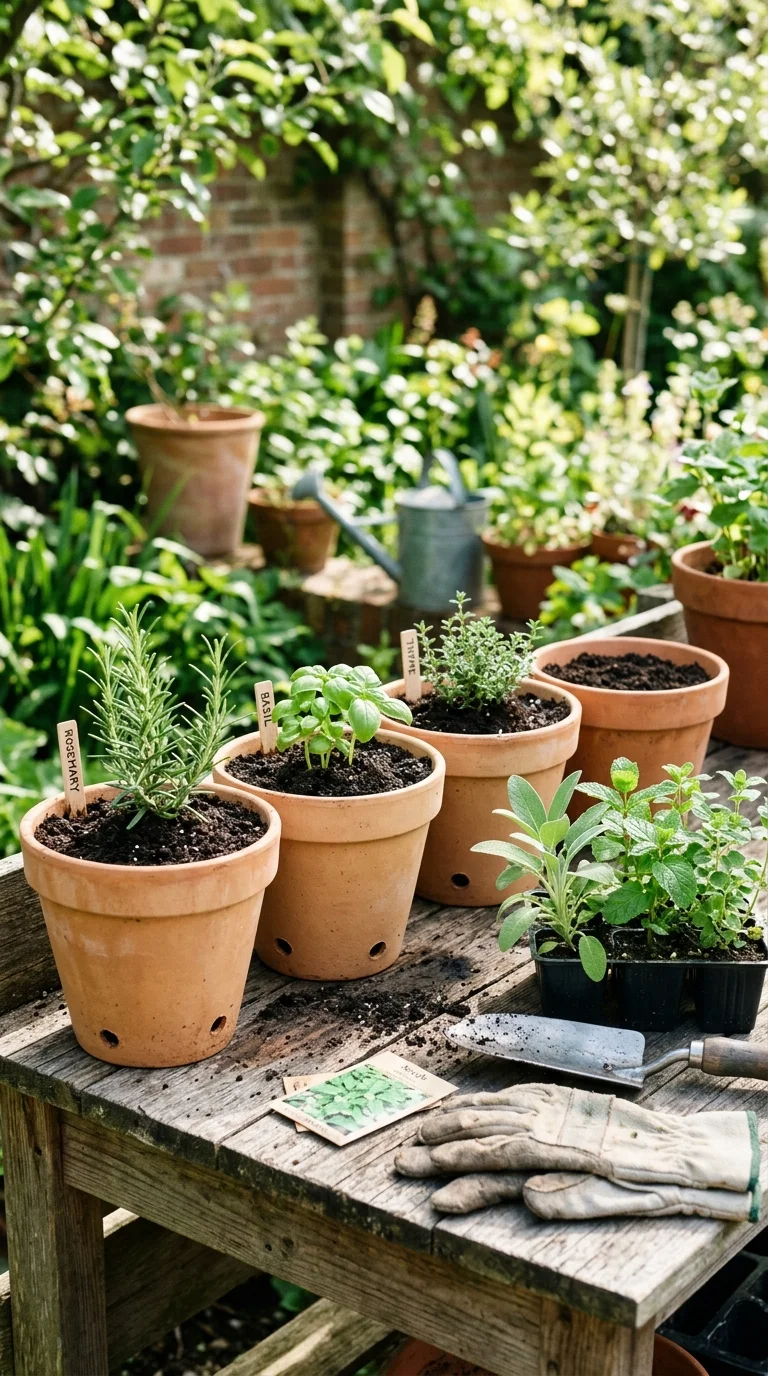
For trowels, watering cans, pots, and accessories, budget options perform nearly identically to premium alternatives. A $5 terracotta pot drains water just as well as a $25 designer pot. A basic metal trowel digs soil just as effectively as a luxury branded version. Save your money for quality seeds, good soil, and sharp blades.
Tool Maintenance: Making Your Equipment Last
Proper tool maintenance extends the life of your equipment and keeps it performing at its best. After each use, wipe down blades with a damp cloth to remove sap and soil residue. Dry blades thoroughly before storing to prevent rust.
Sharpen pruning shears and snips at least twice per season using a small sharpening stone or file. A sharp blade cuts cleanly and reduces the effort required, which means less hand fatigue and better plant health. Apply a light coat of mineral oil to metal parts before long-term storage.
For trowels and metal tools, a wire brush removes caked-on soil and rust. Wash plastic watering cans with warm soapy water periodically to prevent algae buildup. Store all tools in a dry location, ideally hanging on hooks or in a dedicated toolbox where they will not be damaged by moisture.
Building Your First Herb Garden Tool Kit
Here is a practical starting kit for new herb gardeners that covers all essential tasks without unnecessary spending:
| Tool | Priority | Estimated Cost |
|---|---|---|
| Bypass pruning shears | Essential | $15 – $40 |
| Herb snips | Essential | $5 – $12 |
| Hand trowel | Essential | $8 – $15 |
| Narrow-spout watering can | Essential | $10 – $20 |
| Soil moisture meter | Recommended | $10 – $25 |
| Plant labels | Recommended | $5 – $10 |
| Garden kneeling pad | Optional | $10 – $20 |
Total starter kit cost: approximately $60 to $140 depending on your choices. This collection will handle everything from seed starting to daily harvesting for years to come.
Frequently Asked Questions
Q: What are the essential tools for growing herbs at home?
A: The three most essential tools are sharp herb snips or pruning shears, a hand trowel for potting, and a watering can with a narrow spout. These three items cover 90% of herb gardening tasks from planting to harvesting.
Q: What is the best pruning shear for herbs?
A: Bypass pruning shears are the best choice for herbs because they make clean cuts without crushing stems. Look for lightweight models with ergonomic handles and stainless steel blades. Felco and Okatsune make excellent options at different price points.
Q: Do I need a soil moisture meter for herbs?
A: A soil moisture meter is helpful but not essential. Most experienced gardeners learn to check moisture by inserting a finger one to two inches into the soil. However, meters are useful for beginner gardeners and for monitoring herbs in hard-to-reach containers.
Q: What are the best pots for growing herbs?
A: Terracotta pots with drainage holes are the best choice for most herbs. The porous material allows soil to breathe and prevents waterlogging. Choose pots at least 6 inches deep for most herbs, and 8 to 12 inches for larger varieties like rosemary and basil.
Q: How much should you spend on herb gardening tools?
A: Beginners can start with a quality set of snips and a trowel for under $30 total. Invest in one high-quality pair of pruning shears that will last decades, and buy cheaper options for trowels, watering cans, and accessories where durability matters less.
Related Articles
- How to Grow Herbs at Home: Complete Beginner’s Guide
- Best Soil for Herbs: Fertilizer Guide for Maximum Flavor and Growth
- Herb Companion Planting Guide: What to Plant Together for Better Growth
- How to Grow Basil at Home: From Seed to Pesto in 30 Days
- How to Grow Rosemary from Cuttings