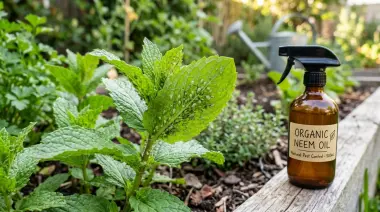
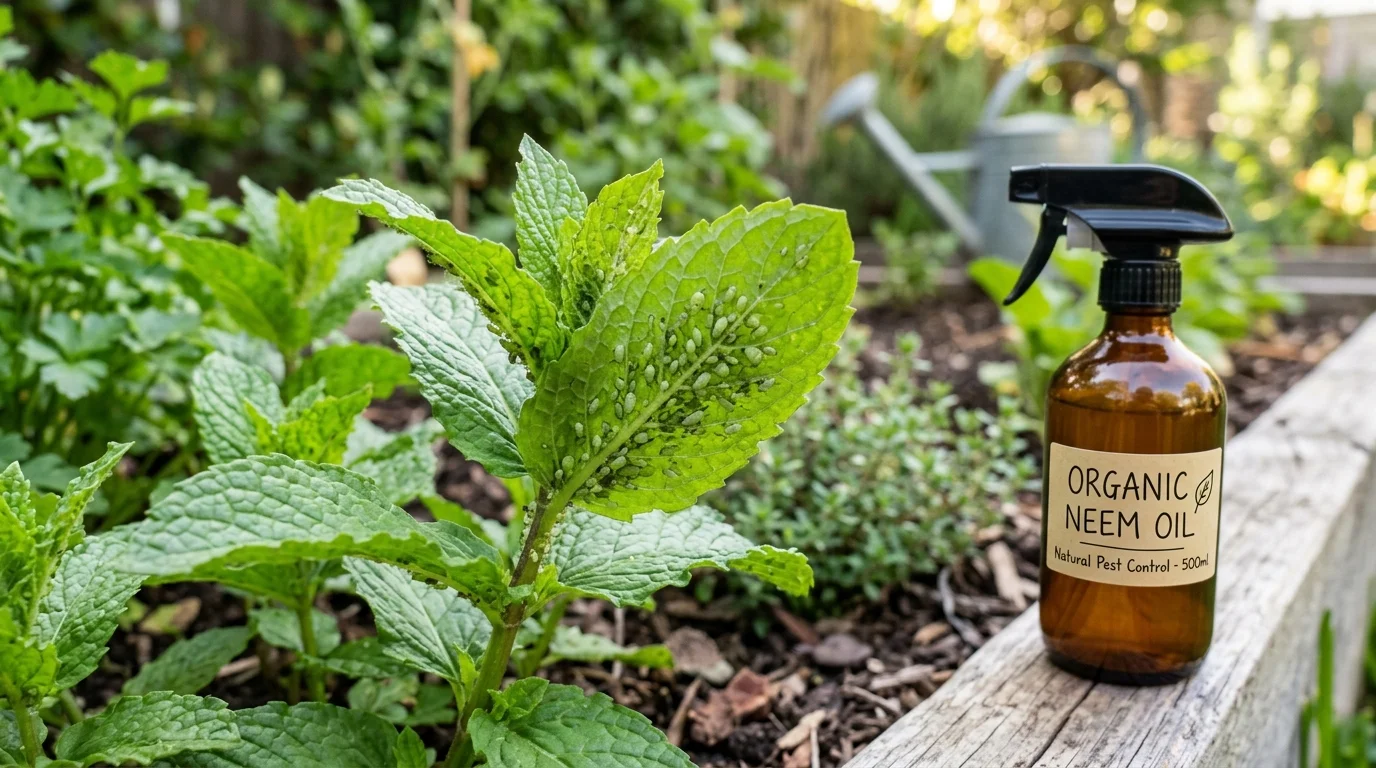
Nothing is more frustrating than checking on your thriving herb garden only to discover tiny invaders munching through your basil, sucking the life from your rosemary, or leaving slime trails across your parsley. Herb garden pests are an inevitable part of growing, but the good news is that you do not need harsh chemicals to protect your plants. This guide identifies the eight most common herb garden pests and provides proven, natural solutions that actually work to keep your herbs healthy and chemical-free.
Quick Answer: The most effective natural solutions for herb garden pests include neem oil spray, diatomaceous earth for slugs, yellow sticky traps for whiteflies, hand-picking caterpillars, and companion planting with chives, garlic, and marigolds to deter infestations before they start.
Why Do Herbs Get Pests in the First Place?
Herbs are actually more resistant to pests than many other garden plants, largely because their strong essential oils naturally repel insects. However, when herbs are stressed by drought, poor soil, overcrowding, or excessive nitrogen fertilizer, their natural defenses weaken and they become targets.
Pests are also drawn to specific conditions. Aphids prefer tender new growth, spider mites thrive in hot and dry environments, and slugs love cool, damp soil. Understanding what attracts each pest helps you both treat and prevent infestations organically.
The key principle of natural pest control is that healthy soil produces healthy plants, and healthy plants resist pests far better than weakened ones. Before reaching for any spray, make sure your herbs are getting proper sunlight, consistent water, and good airflow. Most pest problems resolve themselves once the underlying growing conditions are corrected.
How Do You Identify and Treat Aphids on Herbs?
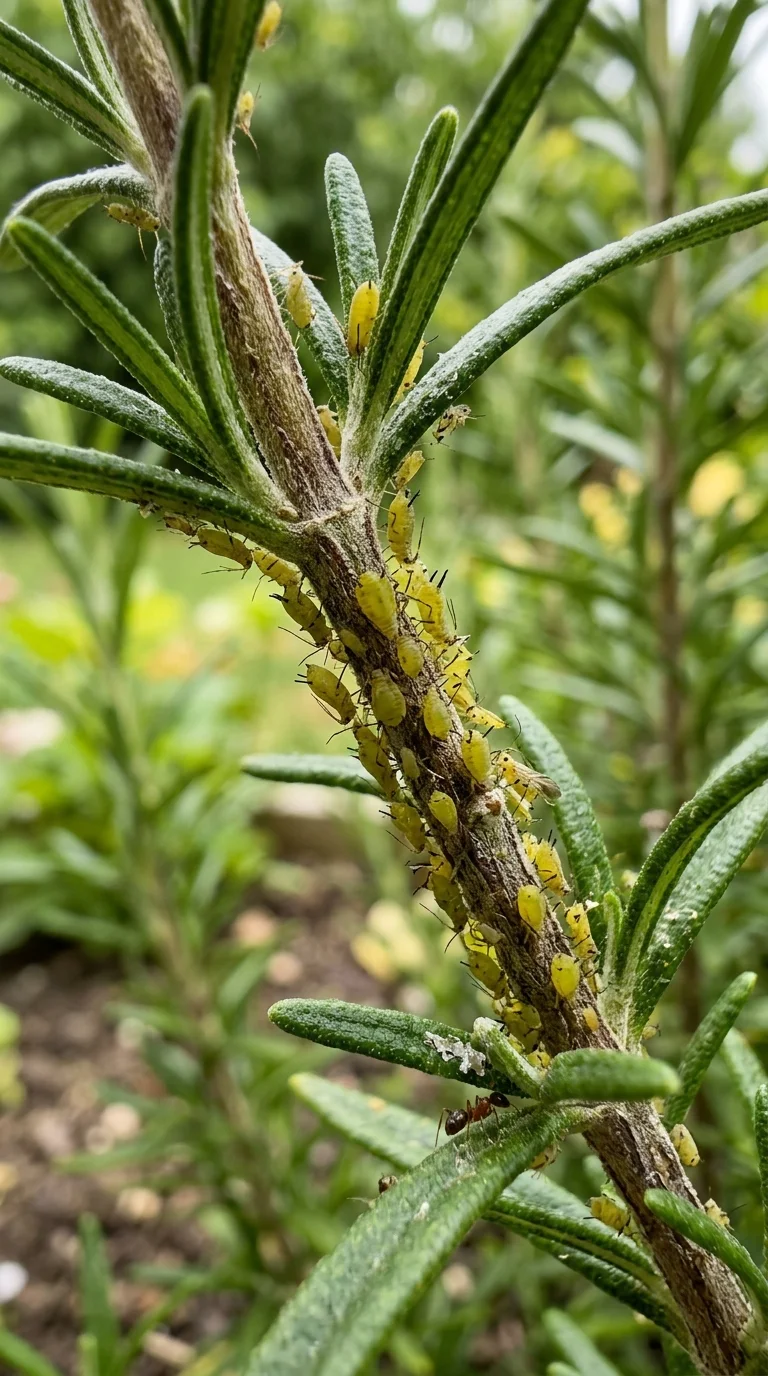
Aphids are tiny, soft-bodied insects, usually green, black, or white, that cluster on the undersides of leaves and at the tips of new growth. They feed by piercing the plant tissue and sucking out sap, causing curled leaves, stunted growth, and a sticky residue called honeydew that attracts ants and promotes sooty mold.
To get rid of aphids on herbs naturally:
- Blast them off: Use a strong stream of water from a garden hose or spray bottle to knock aphids off the plant. Repeat daily for a week.
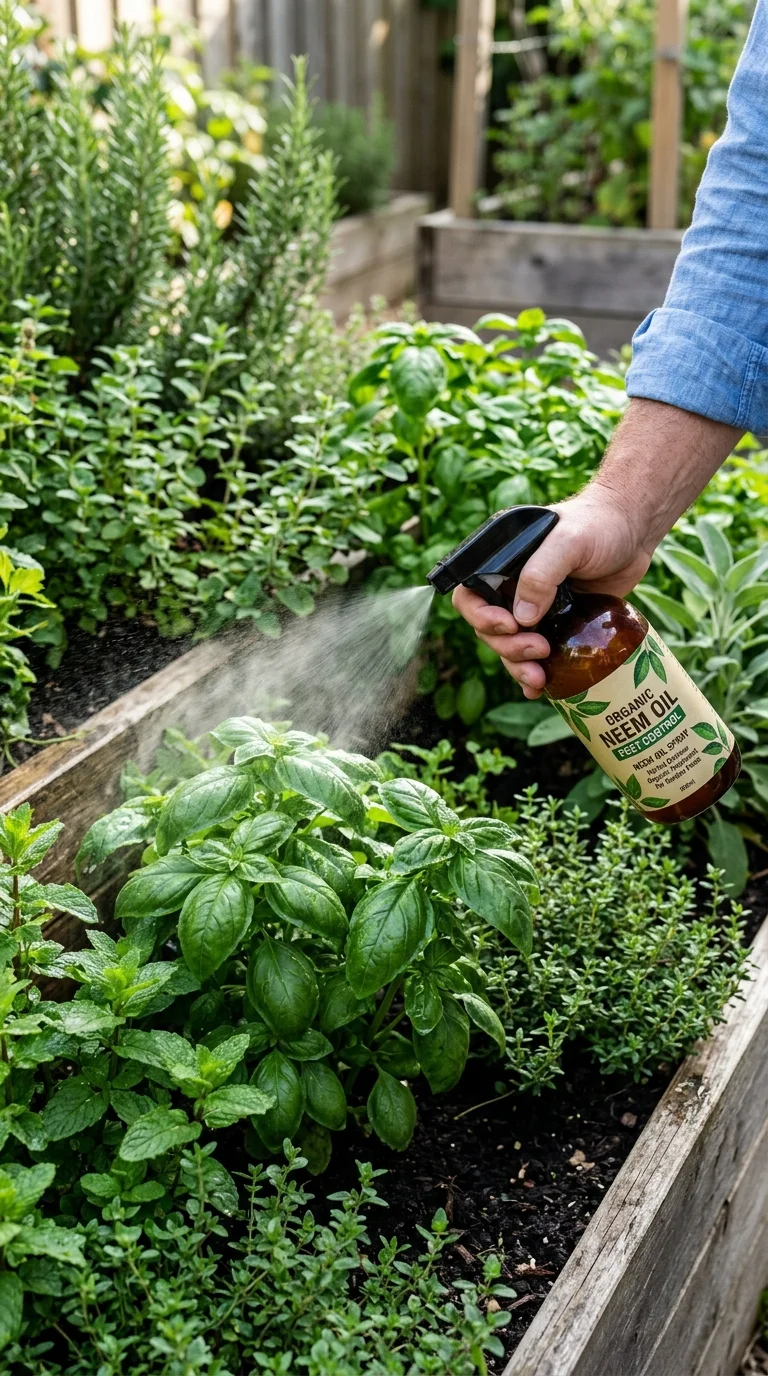
- Apply neem oil: Mix one tablespoon of cold-pressed neem oil with one quart of water and a few drops of dish soap. Spray the entire plant, focusing on the undersides of leaves. Apply in the evening to avoid leaf burn.
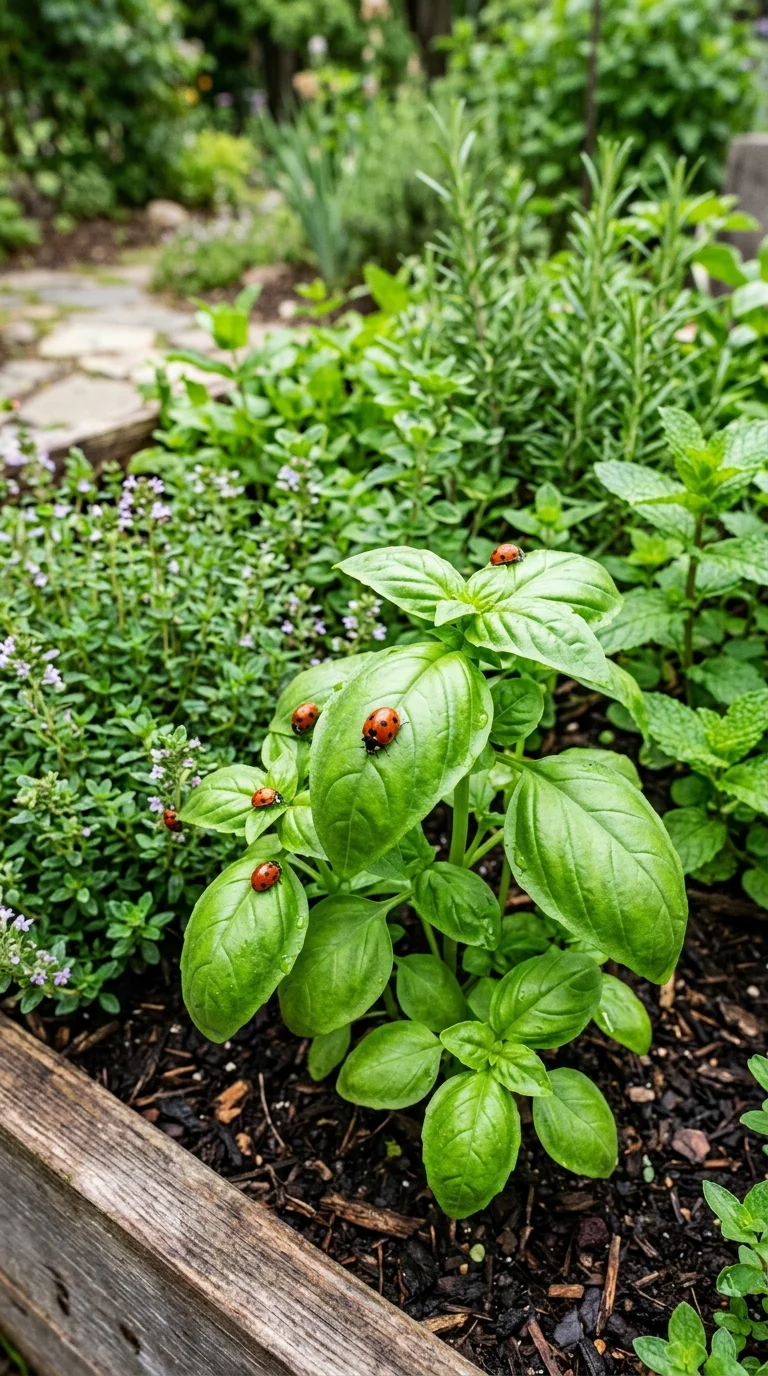
- Release ladybugs: These natural predators devour aphids voraciously. One ladybug can eat up to 50 aphids per day.
- Companion plant with chives: Growing chives or garlic near basil and other susceptible herbs repels aphids naturally. Learn more about growing chives from seed.
Repeat treatments every 3 to 5 days until the aphid population is under control. Heavy infestations may require a combination of methods.
What Is the Best Natural Solution for Spider Mites?
Spider mites are not insects but arachnids, which means many general insecticides do not affect them. They are barely visible to the naked eye and are identified by fine webbing on the undersides of leaves, stippled or bronzed foliage, and tiny moving specks on stems.
Spider mites thrive in hot, dry, dusty conditions. The best natural approach combines environmental management with treatment:
- Increase humidity: Spider mites hate moisture. Mist your herbs regularly, especially indoor plants and those in greenhouse environments.
- Spray with water: A strong spray disrupts mite colonies and washes away eggs. Focus on the undersides of leaves.
- Apply neem oil or insecticidal soap: Both break down the mite’s protective coating. Spray every 5 to 7 days for three to four weeks.
- Remove severely infested leaves: If webbing is extensive, prune and destroy those leaves to prevent spread.
- Introduce predatory mites: Phytoseiulus persimilis is a commercially available mite that feeds exclusively on spider mites and is highly effective.
Prevention is the strongest defense. Keep herbs well-watered during heat waves and avoid placing indoor herbs near heating vents that create the dry conditions spider mites love.
How Do I Get Rid of Whiteflies Without Chemicals?
Whiteflies are small, moth-like insects that fly up in a cloud when you disturb an infested plant. Like aphids, they feed on plant sap and produce honeydew. Heavy infestations cause yellowing leaves, reduced vigor, and premature leaf drop.
Natural whitefly control methods include:
- Yellow sticky traps: Whiteflies are attracted to the color yellow. Hang yellow sticky cards or tape near your herbs to catch adult whiteflies and monitor population levels.
- Neem oil spray: Apply every 7 days, covering both the tops and undersides of leaves. Neem disrupts the whitefly life cycle at multiple stages.
- Reflective mulch: Placing aluminum foil or reflective material around the base of plants confuses whiteflies and reduces landing success.
- Remove heavily infested leaves: Pruning back the worst-affected foliage removes eggs and nymphs and improves airflow.
- Companion planting: Plant nasturtiums near your herbs as a trap crop. Whiteflies prefer nasturtiums and will congregate there instead of your valuable herbs.
Whiteflies reproduce quickly, so consistency is important. Treat every 5 to 7 days for at least three weeks to break the breeding cycle.
What Natural Methods Control Slugs and Snails on Herbs?
Slugs and snails are most active at night and during wet weather. They chew large, irregular holes in leaves and leave distinctive slime trails. Herbs like parsley, basil, and cilantro are particularly vulnerable because their soft, low-growing leaves are easy targets.
Effective organic slug control includes:
- Diatomaceous earth: Sprinkle food-grade diatomaceous earth around the base of plants. The sharp particles cut into slug bodies and dehydrate them. Reapply after rain.
- Beer traps: Sink a shallow container into the soil near your herbs and fill it with beer. Slugs are attracted to the yeast, fall in, and drown.
- Hand-picking: Go out after dark with a flashlight and a bucket of soapy water. Collect slugs by hand and dispose of them.
- Copper tape: Place copper tape around the rim of raised beds or pots. Slugs receive a mild electric shock when they cross the copper barrier.
- Encourage predators: Ground beetles, frogs, and birds are natural slug predators. Create habitat by adding a small water feature, a log pile, or a bird feeder near your herb garden.
Keep the area around your herbs clear of mulch, boards, and debris where slugs hide during the day. Water in the morning rather than the evening so the soil surface dries before nightfall.
How Do I Prevent Caterpillars from Eating My Herbs?
Caterpillars can strip an herb plant to bare stems overnight. Common culprits include cabbage loopers, tomato hornworms, and parsley worms, which is the caterpillar of the swallowtail butterfly and should be protected if you can tolerate some leaf damage.
Natural solutions for caterpillars:
- Hand-pick: Inspect plants daily and pick off caterpillars by hand. Drop them into soapy water or relocate them far from your garden.
- Bt spray (Bacillus thuringiensis): This naturally occurring bacterium is toxic only to caterpillars and safe for humans, pets, and beneficial insects. Mix with water and spray on foliage.
- Row covers: Lightweight floating row covers prevent butterflies and moths from laying eggs on your herbs in the first place.
- Companion plant with dill and fennel: These herbs attract parasitic wasps that lay their eggs inside caterpillars, providing natural biological control.
- Encourage birds: Bird feeders and birdbaths near the herb garden bring in birds that feast on caterpillars.
What Are Fungus Gnats and How Do I Stop Them Indoors?
Fungus gnats are tiny, dark flying insects that hover around indoor herb pots. While the adults are mostly a nuisance, their larvae feed on organic matter in the soil and can damage the fine root hairs of young herbs, causing stunted growth and wilting.
To control fungus gnats organically:
- Allow soil to dry: Fungus gnat larvae need moist soil to survive. Let the top inch of potting mix dry completely between waterings. This alone can dramatically reduce populations.
- Yellow sticky traps: Place sticky cards on the soil surface to catch flying adults and break the breeding cycle.
- Mosquito bits (Bti): Sprinkle Bacillus thuringiensis israelensis granules on the soil surface and water them in. Bti kills fungus gnat larvae without harming plants, pets, or beneficial insects.
- Top-dress with sand: A half-inch layer of coarse sand over the potting mix prevents adults from laying eggs in the soil.
- Avoid overwatering: This is the single most important preventive measure. Healthy, well-drained soil keeps fungus gnat populations naturally low.
For more tips on growing herbs in containers, check our guide on how to grow herbs at home.
How Do I Deal with Mealybugs and Scale on Herbs?
Mealybugs are white, cottony insects that cluster in leaf joints and along stems. Scale insects appear as small brown bumps on stems and leaves. Both suck plant sap and weaken herbs over time, causing yellowing, leaf drop, and eventual plant death if untreated.
Natural treatment for both pests:
- Isopropyl alcohol dab: Dip a cotton swab in 70 percent isopropyl alcohol and touch it directly to each mealybug or scale insect. The alcohol dissolves their protective coating on contact.
- Neem oil spray: Apply neem oil every 7 to 10 days to suffocate remaining pests and prevent eggs from hatching.
- Prune heavily infested areas: Remove stems where pests are concentrated and dispose of them in sealed bags.
- Horticultural oil: A dormant or summer-rate horticultural oil spray smothers both mealybugs and scale. Apply in cool weather to avoid leaf burn.
- Inspect new plants: Mealybugs and scale often enter the garden on new purchases. Quarantine new plants for two weeks before placing them near your herbs.
Both pests reproduce slowly compared to aphids, so early detection makes treatment much easier. Check your herbs weekly, especially in the leaf joints where pests like to hide.
What Is the Best Overall Organic Pest Prevention Strategy?
The best defense against herb garden pests is a proactive, layered approach rather than waiting for an infestation and reacting. Build your pest management on these principles:
- Healthy soil: Amend with compost and avoid over-fertilizing. Excess nitrogen produces soft, tender growth that pests love.
- Proper spacing: Good airflow reduces humidity around leaves and discourages fungal disease and pest buildup.
- Companion planting: Group herbs strategically. Chives repel aphids, marigolds deter nematodes, basil repels mosquitoes, and nasturtiums trap aphids away from other plants.
- Rotate locations: If growing in containers, move herbs to different spots each season to disrupt pest life cycles.
- Regular inspection: Walk through your garden every morning and evening. Catching pests early makes organic control far more effective.
- Beneficial insects: Attract or purchase ladybugs, lacewings, predatory mites, and parasitic wasps. These natural predators keep pest populations in check without any effort from you.
Frequently Asked Questions
Q: What are the most common pests on herb plants?
A: The most common herb garden pests are aphids, spider mites, whiteflies, slugs, caterpillars, fungus gnats, mealybugs, and scale insects. Each targets herbs differently, but all can be managed with organic methods before chemical intervention is needed.
Q: How do I get rid of aphids on herbs naturally?
A: Spray aphids off with a strong stream of water, then apply neem oil or insecticidal soap. Release ladybugs as a biological control. Repeat every 3 to 5 days until the infestation clears. Prevent recurrence by companion planting with chives or garlic.
Q: Are there natural ways to control slugs on herbs?
A: Yes. Use diatomaceous earth around plant bases, set beer traps, hand-pick slugs at dusk, and encourage ground beetles and frogs. Copper tape around raised beds also creates a barrier slugs will not cross.
Q: What causes whiteflies on herbs and how do I stop them?
A: Whiteflies thrive in warm, sheltered conditions and are attracted to yellow. Hang yellow sticky traps near herbs to monitor and reduce populations. Spray with neem oil or insecticidal soap and remove heavily infested leaves.
Q: Can I use companion planting to prevent herb pests?
A: Yes. Planting chives, garlic, marigolds, and nasturtiums near herbs deters many common pests. Chives repel aphids, marigolds deter nematodes, and nasturtiums act as trap crops that lure aphids away from your herbs.
Q: How do I identify spider mites on my herbs?
A: Look for fine webbing on the undersides of leaves, stippled or yellowing foliage, and tiny moving dots on the stems. Spider mites flourish in hot, dry conditions. Increase humidity and spray plants with water to deter them, then apply neem oil.
Q: Is neem oil safe to use on herbs I plan to eat?
A: Yes, neem oil is safe on herbs when applied correctly. Mix according to package directions, spray in the evening to avoid leaf burn, and wash herbs thoroughly before cooking or eating. Neem breaks down quickly and leaves no harmful residue.
