Choosing the right soil for your herb garden is one of the most important decisions you will make as a grower. The difference between herbs that barely survive and herbs that burst with flavor often comes down to what is happening beneath the surface. Whether you are filling pots on a balcony or amending beds in your backyard, understanding herb soil requirements and proper fertilization will transform your harvest.
Quick Answer: The best soil for herbs is a loose, well-draining potting mix with a pH between 6.0 and 7.0. Combine peat-free compost with perlite and a small amount of worm castings. Fertilize every 4 to 6 weeks during the growing season with a diluted organic fertilizer at half the recommended strength.
Why Does Herb Soil Matter So Much?
Herbs are not like tomatoes or squash. They do not want rich, heavy soil bursting with nitrogen. In fact, many culinary herbs evolved in lean, rocky Mediterranean soils where nutrients were scarce and drainage was excellent. When you give herbs soil that is too fertile or too heavy, you get fast, leafy growth that lacks the essential oils responsible for flavor and aroma.
The right herb soil fertilizer strategy mimics these natural conditions. You want a growing medium that holds just enough moisture for the roots to drink, drains freely so roots never sit in water, and provides a steady but modest supply of nutrients. Getting this balance right is the foundation of growing herbs that taste as good as they smell.
What Is the Ideal Potting Mix for Container Herbs?
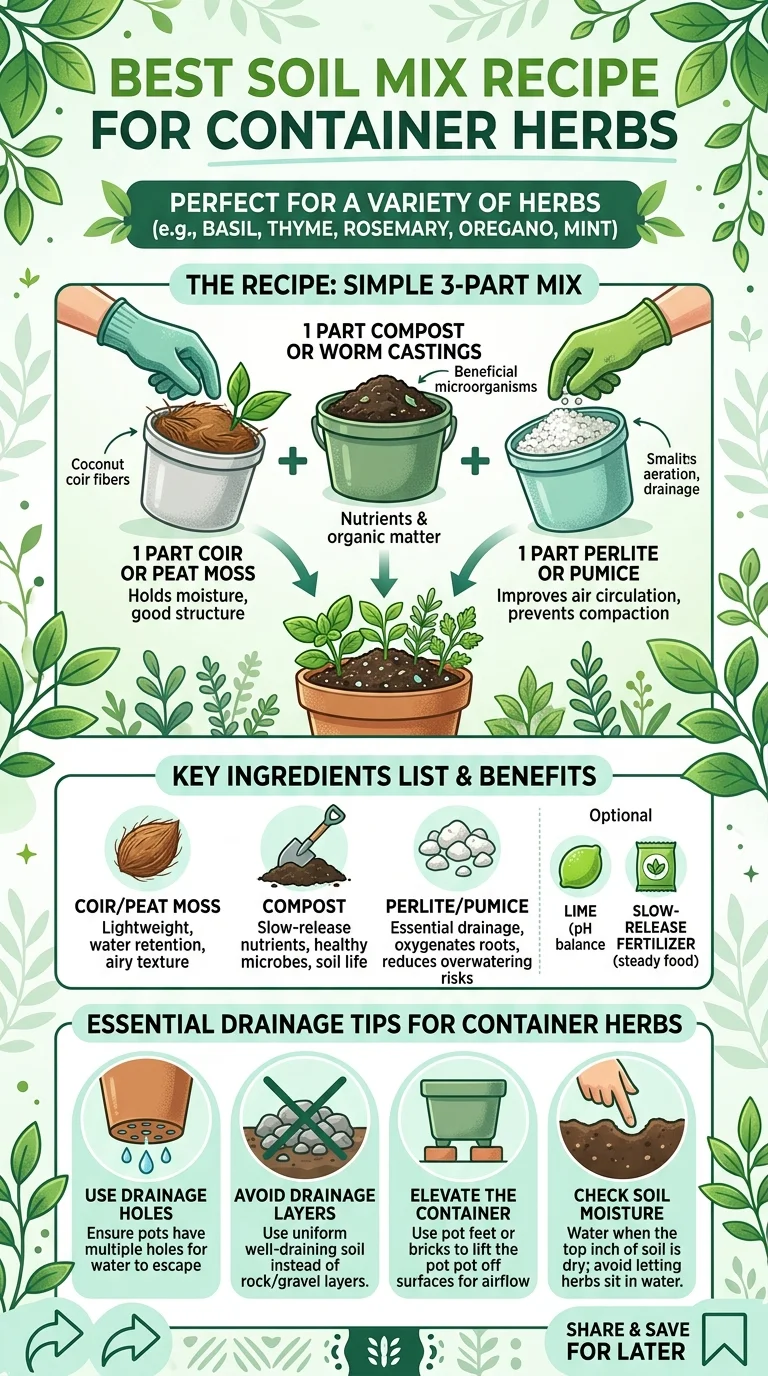
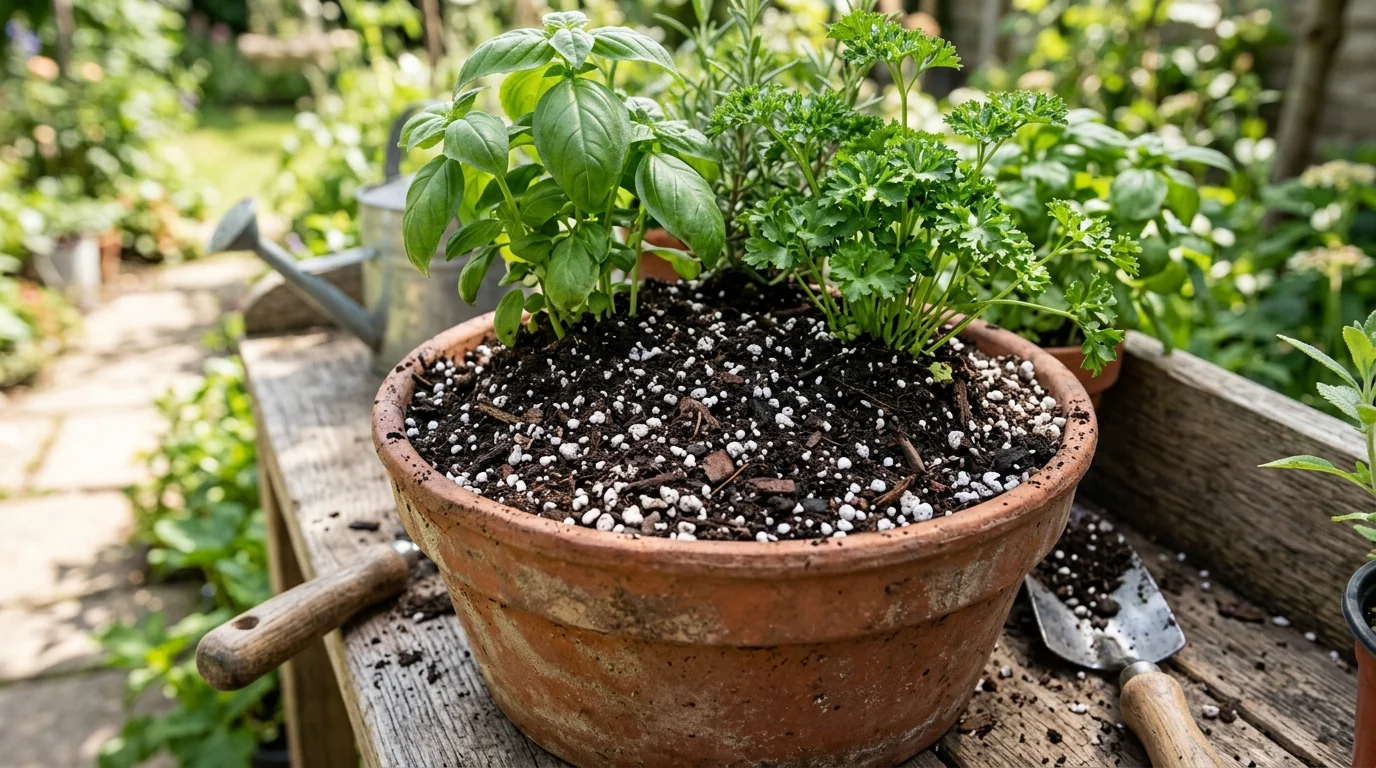
Container herbs have different needs than garden herbs because they cannot spread their roots outward to find nutrients and water. Everything they need must be in that pot. Here is a reliable potting mix for herbs that works for almost every variety:
- 70% peat-free multipurpose compost forms the base and provides organic matter
- 20% perlite or horticultural grit ensures drainage and prevents compaction
- 10% worm castings or well-rotted compost adds gentle, slow-release nutrition
You can buy pre-made herb potting mixes, but making your own gives you control over quality and cost. For Mediterranean herbs like rosemary, thyme, and oregano, increase the perlite to 30% and reduce the compost accordingly. These herbs need sharper drainage and will suffer in mixes that stay wet too long.
For herbs that prefer slightly richer soil, such as basil, mint, and parsley, you can add an extra handful of worm castings. These heavy-producing herbs will benefit from the additional nitrogen during their peak growing months.
What pH Level Do Herbs Prefer?
Most culinary herbs thrive in a slightly acidic to neutral pH range of 6.0 to 7.0. This range allows the plant to absorb nutrients efficiently without locking out key minerals. Below is a quick reference for common herbs:
| Herb | Preferred pH |
|---|---|
| Basil | 6.0 – 7.0 |
| Rosemary | 6.0 – 7.0 |
| Thyme | 6.0 – 8.0 |
| Parsley | 6.0 – 7.0 |
| Mint | 6.0 – 7.0 |
| Chives | 6.0 – 7.0 |
| Cilantro | 6.2 – 6.8 |
If your soil pH is too low or too high, herbs will show nutrient deficiencies even when those nutrients are present in the soil. A simple soil pH test kit from your garden centre will help you check and adjust before planting.
Organic vs. Synthetic Fertilizers for Herbs
This is one of the most common questions gardeners ask. The answer depends on your goals and growing conditions. Organic fertilizers release nutrients slowly as soil microbes break them down. This steady feed means less risk of burning roots and better long-term soil health. Popular organic options include fish emulsion, seaweed extract, compost tea, and diluted worm casting leachate.
Synthetic fertilizers dissolve quickly and deliver nutrients immediately. They are useful when your herbs show a clear deficiency and need a fast fix. However, they do not improve soil structure and can cause salt buildup in pots over time. If you choose synthetic, always dilute to half the label strength for herbs.
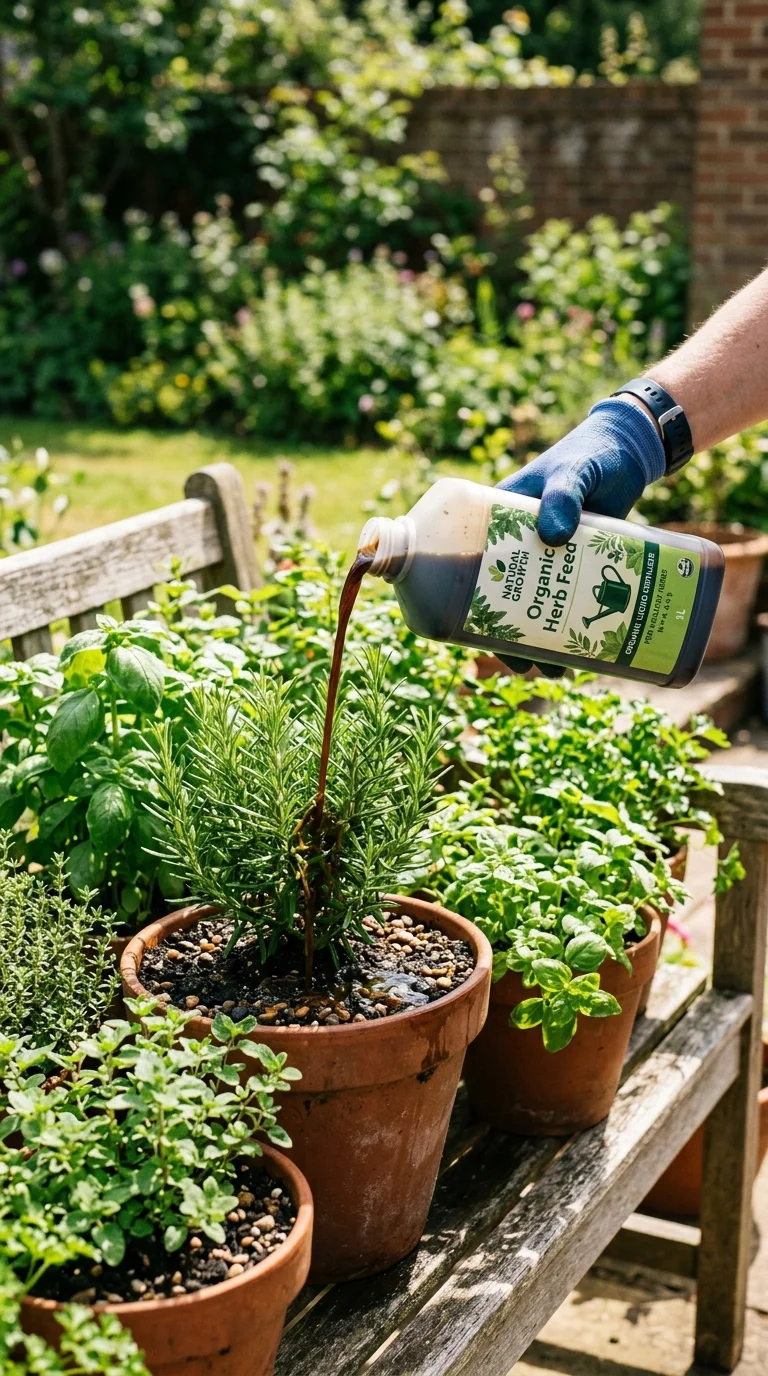
For most home gardeners, organic fertilizers are the better choice. They support the soil food web, reduce the risk of over-feeding, and produce herbs with stronger flavor profiles. If you are growing herbs in containers, organic liquid feeds are especially convenient because they can be mixed into your regular watering routine.
How to Fertilize Herbs Based on Herb Type
Not all herbs have the same appetite. Feeding schedules should be tailored to each herb’s growth habit and nutritional needs. Here is a practical herb fertilizer guide broken down by category:
Light Feeders
Mediterranean herbs like rosemary, thyme, sage, and oregano prefer lean conditions. These plants evolved in poor, rocky soils and do not need much supplementation. Feed them once at the start of spring with a balanced organic fertilizer or a thin layer of compost on the soil surface. That is usually enough for the entire season.
Medium Feeders
Chives, parsley, cilantro, and dill benefit from a moderate feeding schedule. Apply a diluted liquid organic fertilizer every 6 weeks during the growing season. These herbs produce continuously and need a gentle, steady supply of nutrients to maintain leaf production without sacrificing flavor.
Heavy Feeders
Basil and mint are vigorous growers that consume more nutrients. Feed them every 4 weeks with a nitrogen-rich organic fertilizer during peak summer growth. Basil in particular responds well to fish emulsion or seaweed feed applied at half strength. Over-feeding basil will produce large, watery leaves with reduced aroma, so always err on the side of less.
How Do You Know If Your Herbs Need More or Less Fertilizer?
Learning to read your plants is a skill that develops with time. Here are the most common signs of under-fertilizing and over-fertilizing herbs:
Signs of Under-Fertilizing
- Pale or yellowing lower leaves
- Stunted or slow growth despite adequate light and water
- Small, thin leaves that lack color
- Early flowering or bolting in cool-season herbs
Signs of Over-Fertilizing
- Brown or crispy leaf tips and edges
- White crust or salt deposits on the soil surface
- Wilting that does not improve with watering
- Excessive leaf growth with weak stems and reduced fragrance
When in doubt, the golden rule for fertilizing herbs is less is more. It is much easier to fix an under-fed plant than to repair damage from fertilizer burn. Start with half-strength applications and observe how your plants respond before increasing the dose.
Can You Use Kitchen Scraps as Herb Fertilizer?
Yes, several common kitchen waste items make excellent, free fertilizer for herbs. Eggshell crumbles add calcium to the soil and help prevent blossom end rot in fruiting herbs. Banana peel water provides potassium, which supports root development. Diluted coffee grounds add a small amount of nitrogen and can slightly acidify soil, which is helpful for herbs like blueberry-adjacent companion plants.
Composting kitchen scraps and using the finished compost as a top dressing is one of the most sustainable ways to feed your herb garden. You can also make compost tea by steeping finished compost in water for 24 to 48 hours, then straining and applying it directly to the soil around your herbs.
How to Prepare Garden Soil for Planting Herbs
If you are planting herbs directly in the ground rather than in containers, soil preparation is slightly different. Start by testing your garden soil for pH and nutrient levels. Most garden centres sell affordable soil test kits that give results in minutes.
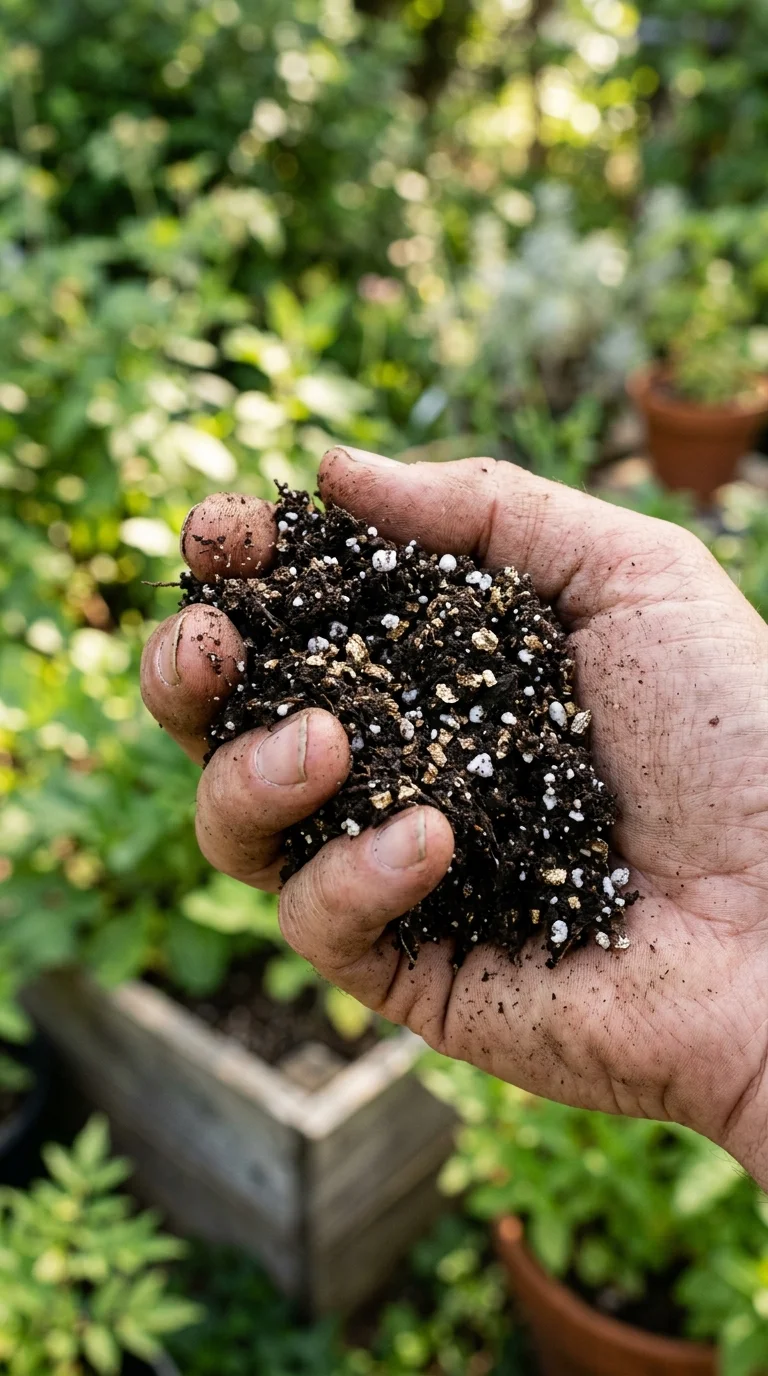
Work organic matter into the top 6 to 8 inches of soil using a garden fork or tiller. A 2 to 3 inch layer of well-rotted compost mixed into existing soil improves drainage in clay soils and adds water retention in sandy soils. For raised beds, fill with a mixture of 60% topsoil, 30% compost, and 10% perlite or coarse sand.
Before planting, remove any existing weeds and rake the surface smooth. Create small mounds or rows for herbs that need extra drainage, such as rosemary and lavender. Avoid adding fresh manure directly to herb beds, as the high nitrogen content can burn delicate roots and promote excessive leafy growth at the expense of flavor.
What Is the Best Watering Technique for Fertilized Herbs?
Watering and fertilizing work together. When you apply liquid fertilizer, always water the soil thoroughly first. This prevents fertilizer from sitting on dry roots, which causes burning. After feeding, water lightly again to help the nutrients soak into the root zone.
For container herbs, water from the base when possible. Place pots in a shallow tray of water and let the soil wick moisture upward through the drainage holes. This method keeps the foliage dry, reduces the risk of fungal disease, and ensures even nutrient distribution throughout the root ball.
Seasonal Fertilizing Calendar for Herbs
Here is a simple month-by-month guide to keeping your herbs well-fed throughout the year:
- March to April: Apply a light top dressing of compost or worm castings as new growth emerges
- May to June: Begin liquid feeding every 4 to 6 weeks for medium and heavy feeders
- July to August: Feed monthly with diluted organic fertilizer; increase watering in hot weather
- September to October: Reduce feeding as growth slows; apply final feeding in early October
- November to February: Stop fertilizing entirely for outdoor herbs; reduce indoor feeding to once every 8 to 10 weeks
This seasonal approach ensures your herbs get nutrition when they need it most without waste or risk of over-feeding during dormant periods.
Quick Reference: Soil and Fertilizer Tips by Herb
Here is a final summary to keep handy when planning your herb garden:
- Basil: Rich, moist soil with regular feeding every 4 weeks
- Mint: Tolerant of heavier soil; benefits from monthly feeding
- Rosemary: Sandy, fast-draining soil; feed once in spring only
- Thyme: Gritty, lean soil; minimal fertilizing required
- Parsley: Moderate soil with feeding every 6 weeks
- Chives: Average garden soil with light compost top dressing
- Oregano: Well-drained soil; avoid over-fertilizing to preserve flavor
- Cilantro: Loose, well-drained soil with moderate feeding
Frequently Asked Questions
Q: What is the best soil for growing herbs in pots?
A: The best soil for herbs in pots is a well-draining potting mix containing 70% peat-free compost, 20% perlite or coarse sand, and 10% worm castings. Herbs dislike heavy, waterlogged soil, so adding perlite ensures excess moisture drains freely.
Q: How often should you fertilize herb plants?
A: Most herbs need fertilizing every 4 to 6 weeks during the active growing season from spring through early autumn. Reduce feeding to once every 8 to 10 weeks in winter. Mediterranean herbs like rosemary and thyme need less frequent feeding than heavy producers like basil.
Q: Can you use coffee grounds as fertilizer for herbs?
A: Yes, spent coffee grounds can be mixed into compost or sprinkled lightly on the soil surface. They add nitrogen and slightly lower soil pH. However, use them sparingly and never in concentrations greater than 10% of the total soil volume, as they can become acidic.
Q: What are the signs of over-fertilizing herbs?
A: Common signs include brown leaf tips, white salt crust on the soil surface, wilting despite adequate watering, and a strong chemical smell from the soil. Over-fertilizing can burn roots and reduce the essential oil concentration that gives herbs their flavor.
Q: Is organic or synthetic fertilizer better for herbs?
A: Organic fertilizers like fish emulsion, seaweed extract, and compost tea are generally better for herbs because they release nutrients slowly and improve soil biology. Synthetic fertilizers work faster but carry a higher risk of root burn and salt buildup in containers.
Related Articles
- How to Grow Herbs at Home: Complete Beginner’s Guide
- How to Grow Basil at Home: From Seed to Pesto in 30 Days
- How to Grow Mint Without Spreading
- How to Grow Thyme Indoors: Sunny Windowsill Guide
- How to Grow Rosemary from Cuttings