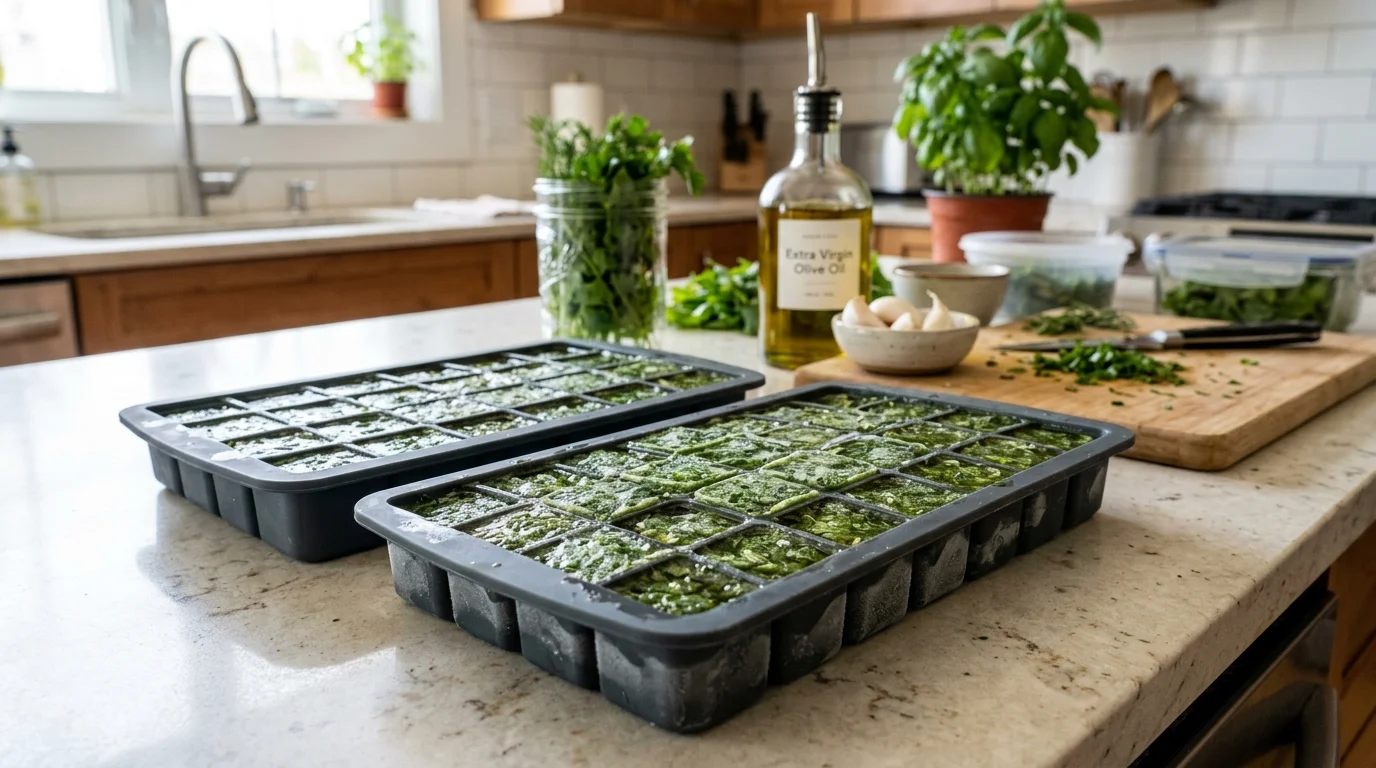
If your herb garden is overflowing with fresh basil, mint, and cilantro but you cannot use it all before it wilts, freezing is the answer. Learning how to freeze fresh herbs using the ice cube method preserves their vibrant flavor for months, giving you garden-fresh taste in your cooking all winter long. This simple technique takes just minutes to prepare and saves both money and harvest from going to waste.
Quick Answer: Chop fresh herbs, pack them into ice cube trays, cover with olive oil or water, and freeze until solid. Transfer the cubes to labeled freezer bags. Use one frozen herb cube as a substitute for one tablespoon of fresh chopped herbs in any cooked dish.
Why Should You Freeze Herbs Instead of Drying Them?
When it comes to preserving herbs, drying and freezing are the two most popular methods, but they produce very different results. Drying removes moisture from the herb, which concentrates the flavor but also changes it. Dried herbs tend to taste more muted and earthy compared to their fresh counterparts.
Freezing, on the other hand, preserves the herb in a state much closer to its fresh form. The essential oils that give herbs their bright, aromatic flavor remain largely intact because the rapid freezing process locks them in place before they can break down. Studies have shown that frozen herbs retain significantly more vitamin C, chlorophyll, and aromatic compounds than their dried equivalents.
The ice cube method is particularly effective because it portions herbs into convenient, ready-to-use amounts. Instead of thawing an entire bag of frozen basil when you only need a spoonful, you simply drop one cube into your pan. It is practical, waste-free, and delivers consistent flavor every time.
The one trade-off is texture. Frozen herbs will be soft when thawed, so they are best used in cooked dishes like soups, sauces, stir-fries, and stews rather than as garnishes. For applications where you need the crisp texture of fresh herbs, freezing is not ideal, but for flavor, it is unmatched.
Which Herbs Freeze the Best?
Not all herbs freeze equally well. The difference comes down to moisture content and leaf structure. Herbs with tender, moisture-rich leaves are the best candidates for freezing because they retain their flavor and color beautifully.
Top herbs for freezing:
- Basil: Freezes exceptionally well and retains its sweet, peppery flavor. The ice cube method with olive oil is the gold standard for preserving basil.
- Cilantro: Freezes beautifully and is perfect for adding to curries, salsas, and soups.
- Parsley: Both flat-leaf and curly parsley freeze well. Flat-leaf retains more flavor.
- Mint: Freezes perfectly for use in teas, cocktails, and Middle Eastern dishes.
- Chives: Freeze in small cubes for easy addition to eggs, potatoes, and sauces.
- Dill: Freezes well for fish dishes, potato salads, and pickling brines.
- Tarragon: Retains its distinctive anise flavor when frozen in oil.
- Lemon balm: Freezes well for teas and desserts.
Herbs better dried than frozen:
- Rosemary: Its low moisture and woody structure make it ideal for drying. Frozen rosemary can become slightly mushy.
- Thyme: Small leaves dry quickly and maintain flavor well. Thyme sprigs can be frozen on the stem, but drying is usually more practical.
- Oregano and marjoram: These herbs dry to a powder that works perfectly in spice blends.
- Sage: Dries beautifully for long-term storage in spice jars.
For a complete guide to growing these herbs at home, visit how to grow herbs at home.
How to Freeze Herbs in Olive Oil: Step-by-Step
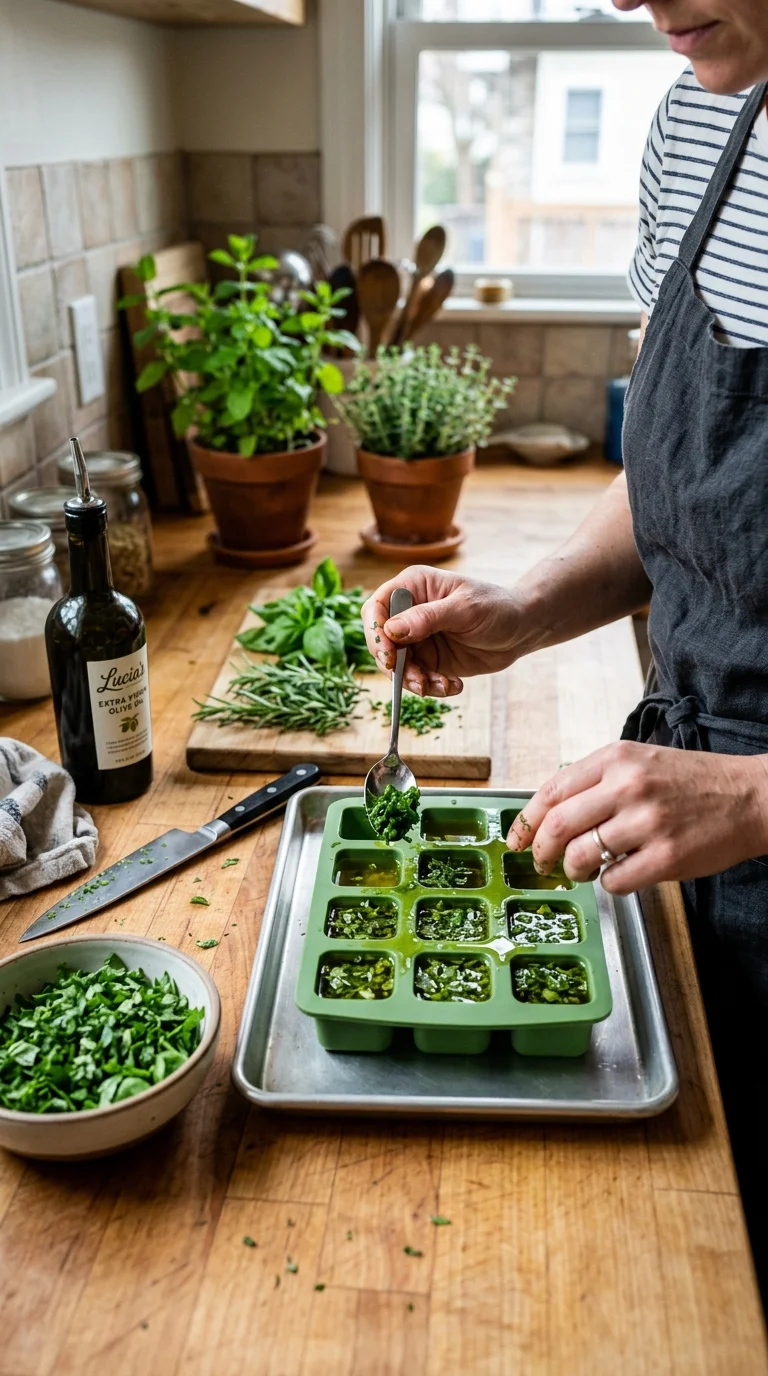
Freezing herbs in olive oil is the most popular method because the fat locks in essential oils and prevents the oxidation that causes browning. Olive oil also means the cubes go directly into your hot pan and melt into a ready-made flavored cooking oil.
What you need:
- Fresh herbs, washed and thoroughly dried
- Extra virgin olive oil
- Ice cube trays (silicone trays work best for easy removal)
- Small food processor or sharp knife
- Freezer bags or airtight containers
- Labels and marker
Steps:
- Wash and dry: Rinse herbs under cool water and pat completely dry with paper towels or use a salad spinner. Any remaining water will create ice crystals that dilute flavor.
- Chop: Pulse herbs in a food processor until finely chopped but not pureed. Alternatively, chop by hand with a sharp knife. The pieces should be small enough to fit easily into ice cube tray compartments.
- Pack the trays: Fill each compartment of the ice cube tray about two-thirds full with chopped herbs.
- Add olive oil: Pour extra virgin olive oil over the herbs until each compartment is full. Use a chopstick or toothpick to stir gently and remove any air bubbles.
- Freeze solid: Place the tray flat in the freezer and freeze for at least 4 to 6 hours or overnight until completely solid.
- Transfer and label: Pop the cubes out of the tray and transfer to labeled freezer bags. Squeeze out as much air as possible before sealing. Label with the herb name and date.
- Store: Keep in the freezer for up to 12 months. Use within 6 months for the best flavor.
How to Freeze Herbs in Water
Freezing herbs in water is a lighter, lower-calorie option that works well when you want the herb flavor without the added oil. Water-frozen herbs are ideal for adding to soups, broths, and sauces where the liquid content is not a concern.
The process is nearly identical to the oil method:
- Chop fresh herbs finely and pack into ice cube tray compartments.
- Cover with water, leaving a small gap at the top to allow for expansion during freezing.
- Freeze until solid, then transfer to labeled freezer bags.
- Use directly in cooking. Drop the cube into any simmering liquid and it melts in seconds, releasing fresh herb flavor.
One tip: water-frozen herbs tend to look slightly less vibrant than oil-frozen ones because water can cause some cell breakdown during freezing. The flavor difference is minimal, but if visual appeal matters to you, oil is the better choice.
What Is the Flash-Freeze Method for Herbs?
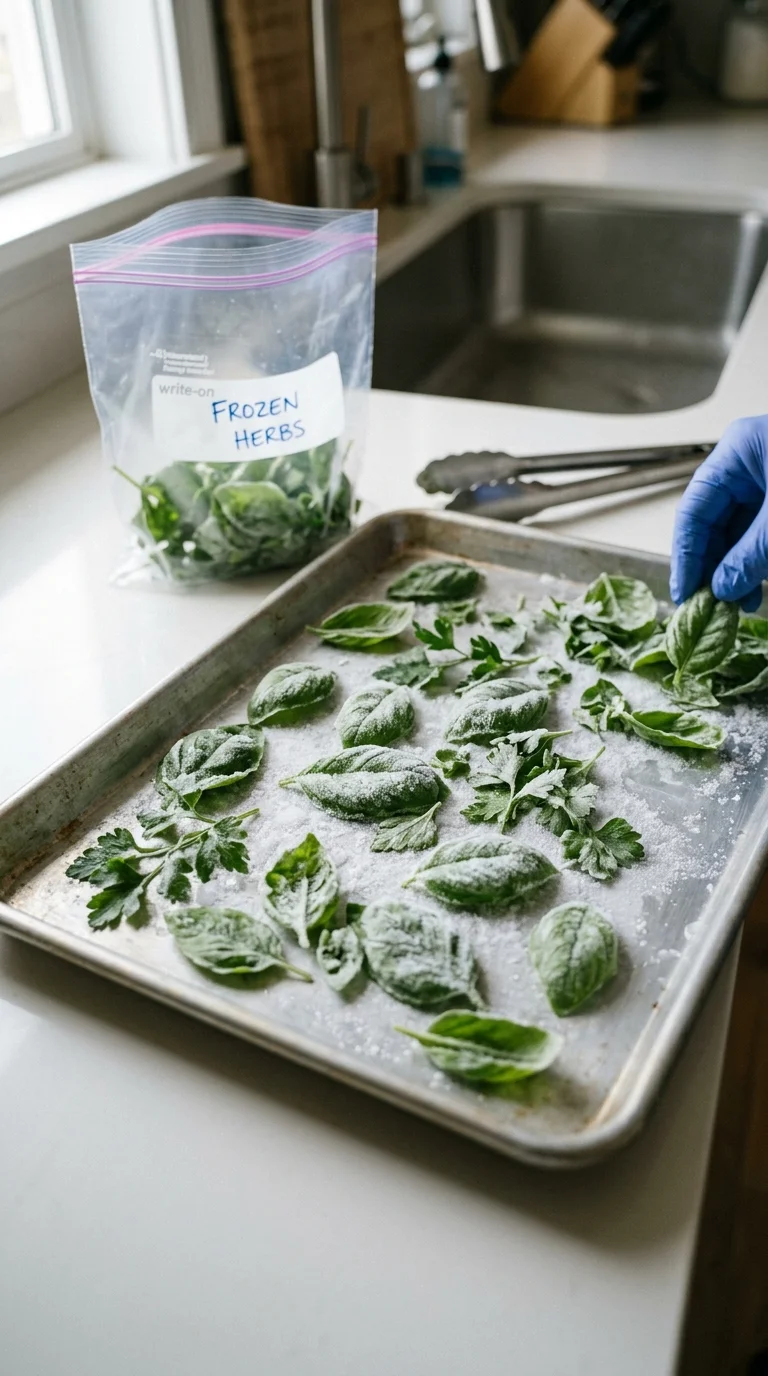
The flash-freeze method is ideal when you want to freeze herbs whole rather than chopped. This preserves the leaf shape and is useful for garnishes, infused oils, or recipes where the visual presentation of the herb matters.
Steps:
- Wash and dry individual herb leaves thoroughly.
- Spread on a baking sheet in a single layer, making sure leaves do not touch or overlap.
- Freeze for 1 to 2 hours until the leaves are completely solid.
- Transfer to freezer bags immediately. The leaves will not clump together because they were frozen individually.
- Store flat in the freezer for up to 12 months.
To use, simply crumble the frozen leaves directly into your dish or let them thaw for a minute on the counter. This method works especially well for basil, mint, and parsley leaves where you want to maintain the whole-leaf appearance.
How Do You Cook with Frozen Herb Cubes?
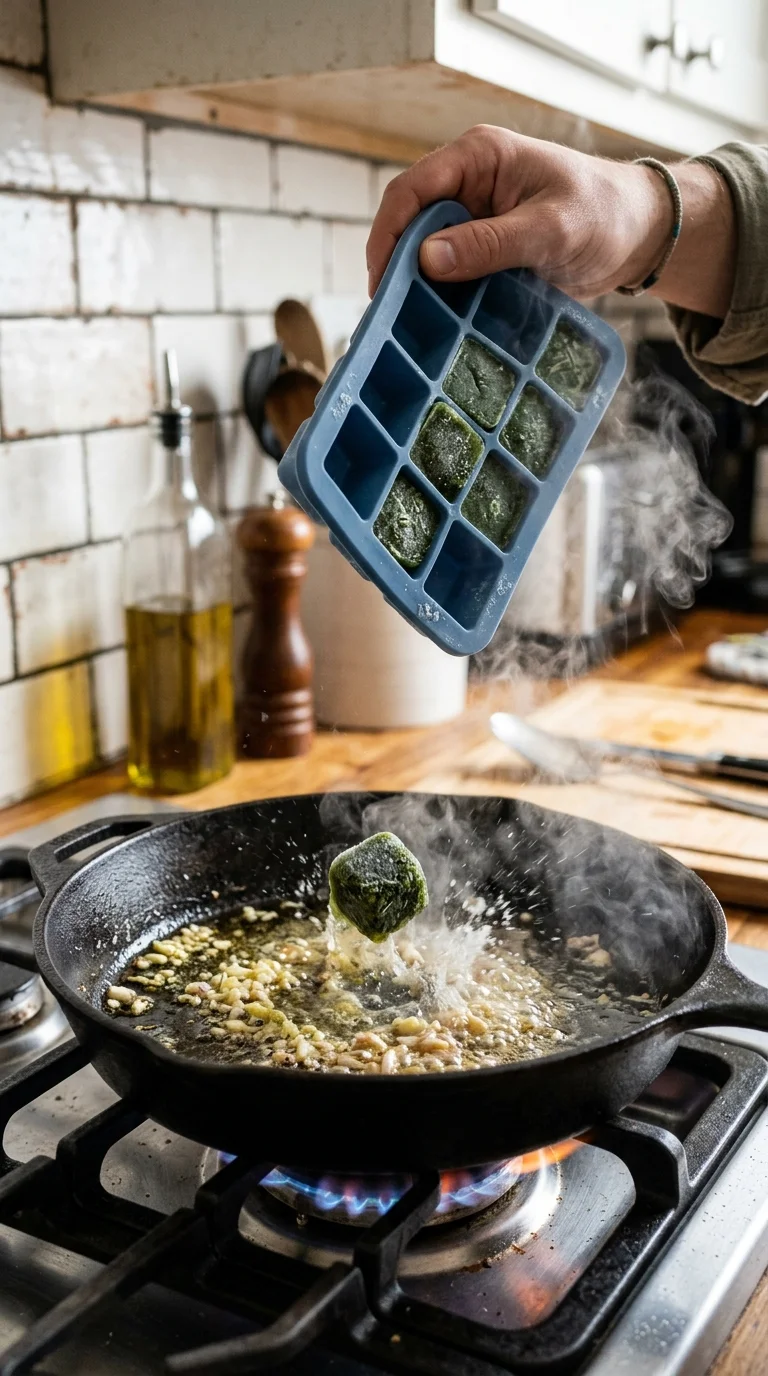
Using frozen herb cubes is one of the simplest kitchen shortcuts. They require zero thawing and go straight from freezer to pan.
Drop directly into hot dishes:
- Soups and stews: Add one or two cubes during the last 10 minutes of cooking.
- Sauces: Stir a cube into tomato sauce, cream sauce, or pesto as it simmers.
- Stir-fries: Toss a cube into the pan with your vegetables and protein.
- Pasta: Drop a basil cube into your pasta water or stir one into the finished sauce.
Measure as you go: One frozen herb cube equals approximately one tablespoon of fresh chopped herbs. This makes recipe substitution simple and consistent.
Do not thaw for cooking: There is no need to thaw frozen herb cubes before use. They melt in seconds in a hot pan and release their flavor immediately. Thawing them on the counter first can cause them to brown and lose potency.
Avoid using frozen herbs in cold dishes: Because frozen herbs are soft when thawed, they do not work well in salads, on pizza toppings, or as garnishes where crisp texture matters. Save those applications for fresh herbs and use your frozen cubes in cooked preparations.
How Do You Maximize Flavor Retention When Freezing?
The key to getting the most vibrant flavor from frozen herbs is minimizing the time between harvest and freezing. Essential oils begin to degrade the moment a leaf is cut, so speed matters.
Follow these flavor-maximizing tips:
- Freeze within hours of harvesting: Pick your herbs in the morning when oil concentration peaks and get them into the freezer the same day.
- Dry thoroughly before chopping: Water on the leaves creates ice crystals that puncture cell walls and dilute flavor. Use a salad spinner and paper towels.
- Do not over-blitz: When chopping in a food processor, pulse briefly. Over-processing releases too much oil and creates a mushy texture.
- Use the freshest olive oil: The quality of your olive oil directly affects the flavor of the frozen cubes. Use a good extra virgin olive oil for the best results.
- Fill trays completely: Air pockets cause freezer burn and flavor loss. Pack herbs tightly and cover completely with oil or water.
- Seal bags tightly: Press out all air before sealing freezer bags. Consider using a vacuum sealer for maximum freshness.
- Freeze quickly: Place trays in the coldest part of your freezer. Quick freezing produces smaller ice crystals and preserves better texture and flavor.
What Is the Storage Life of Frozen Herbs?
Frozen herbs are safe to eat indefinitely if kept at 0°F or below, but flavor does degrade over time. For the best taste experience:
- Best quality: Use within 6 months of freezing.
- Good quality: Still flavorful at 9 to 12 months.
- Acceptable: Edible beyond 12 months but noticeably less aromatic.
Always label your freezer bags with the herb name and date. It is easy to forget what is in an unmarked bag, and herb-specific labeling ensures you grab the right cube for your recipe.
Can I Freeze Herbs from the Grocery Store?
Absolutely. You do not need a garden to benefit from the ice cube method. Grocery store herbs like the packaged basil, cilantro, and parsley sold in the produce section are perfect for freezing when you cannot use them all before they spoil.
Simply wash, dry, chop, and freeze using the same steps outlined above. This is an excellent way to reduce food waste and always have fresh-tasting herbs on hand. If you want to start growing your own, check our guides on how to grow basil at home and how to grow cilantro in pots.
Frequently Asked Questions
Q: Can you freeze fresh herbs without blanching?
A: Yes, most herbs freeze perfectly without blanching. Blanching is only necessary for herbs with high water content like parsley and cilantro if you plan to use them in recipes where texture matters. For most cooking uses, simply chop and freeze directly.
Q: Which herbs freeze the best?
A: Herbs with high moisture and tender leaves freeze exceptionally well. Basil, cilantro, parsley, chives, dill, mint, and tarragon are the best candidates. Woody herbs like rosemary, thyme, and oregano also freeze well but are better dried due to their lower moisture content.
Q: How long do frozen herbs last in the freezer?
A: Frozen herbs maintain good flavor for 6 to 12 months. After that, they remain safe to eat but lose potency. Label each tray with the herb name and date so you can use the oldest cubes first.
Q: Should I freeze herbs in oil or water?
A: Freezing in oil preserves flavor better because the fat locks in essential oils and prevents oxidation. Olive oil is ideal for savory cooking. Water works well if you want lower calories or plan to add the cubes to soups and broths.
Q: How do I use frozen herb cubes in cooking?
A: Drop frozen herb cubes directly into hot pans, soups, stews, sauces, and stir-fries. They melt in seconds and release fresh herb flavor. Use one cube as equivalent to about one tablespoon of fresh chopped herbs.
Q: Can I freeze herbs whole or must they be chopped?
A: You can freeze herbs whole using the flash-freeze method. Spread whole leaves on a baking sheet, freeze until solid, then transfer to a freezer bag. Whole frozen herbs work best for garnishes or recipes where leaf shape matters.
Q: Do frozen herbs taste as good as fresh?
A: Frozen herbs retain significantly more flavor than dried herbs and come very close to fresh. The ice cube method locks in essential oils at their peak, so the taste is vibrant. They will be softer in texture than fresh but deliver excellent flavor in cooked dishes.